

If you’ve ever watched a football player get up after a tackle, or seen a runner stretch out a tight hamstring before a race, you’ve seen athletic training in action. But behind that quick response is a whole system of education, skills, and science most people never think about. A career in sports medicine and athletic training isn’t just about taping ankles or handing out ice packs. It’s about preventing injuries, diagnosing problems early, and helping athletes return to peak performance safely. And it all starts with the right course curriculum.
What’s Actually Taught in a Sports Medicine and Athletic Training Program?
Not every program is the same, but accredited athletic training programs in the U.S. and New Zealand follow standards set by the Commission on Accreditation of Athletic Training Education (CAATE). These programs are designed to turn students into certified professionals who can work with athletes at every level - from high school teams to Olympic competitors.
The curriculum isn’t just theory. It’s hands-on from day one. You’ll spend half your time in classrooms and labs, and the other half in real-world settings like school gyms, sports clinics, and training rooms. The goal? To build competence, not just knowledge.
Core Subjects You’ll Study
Here’s what you’ll actually learn in a typical 4-year bachelor’s program:
- Anatomy and Physiology - You won’t just memorize muscle names. You’ll learn how the knee bends under load, how the shoulder joint stabilizes during a baseball pitch, and why certain injuries recur in specific sports. This isn’t biology class from high school - it’s applied human movement science.
- Exercise Physiology - How does the body respond to intense training? How do you tell if an athlete is overtrained? You’ll study heart rate variability, lactate thresholds, and recovery markers. This helps you design smarter conditioning programs.
- Pathology of Sports Injuries - You’ll learn to recognize the difference between a sprained ankle and a torn ACL just by watching how someone walks. You’ll study concussions, stress fractures, heat illness, and sudden cardiac events. Real cases are used to teach recognition and urgency.
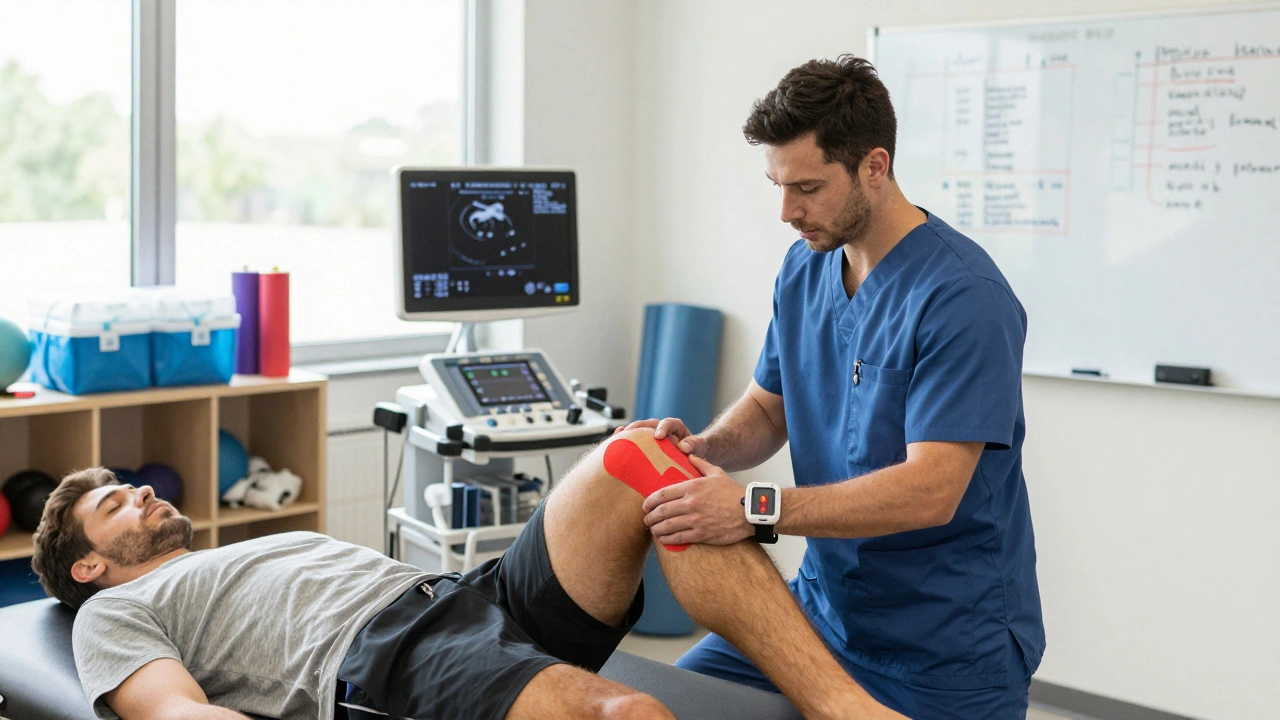
- Therapeutic Modalities - Ultrasound, electrical stimulation, cold laser therapy, kinesiology taping - you’ll learn when and how to use each tool. Not all of them work for every injury. You’ll also learn which ones are backed by evidence and which are just trendy.
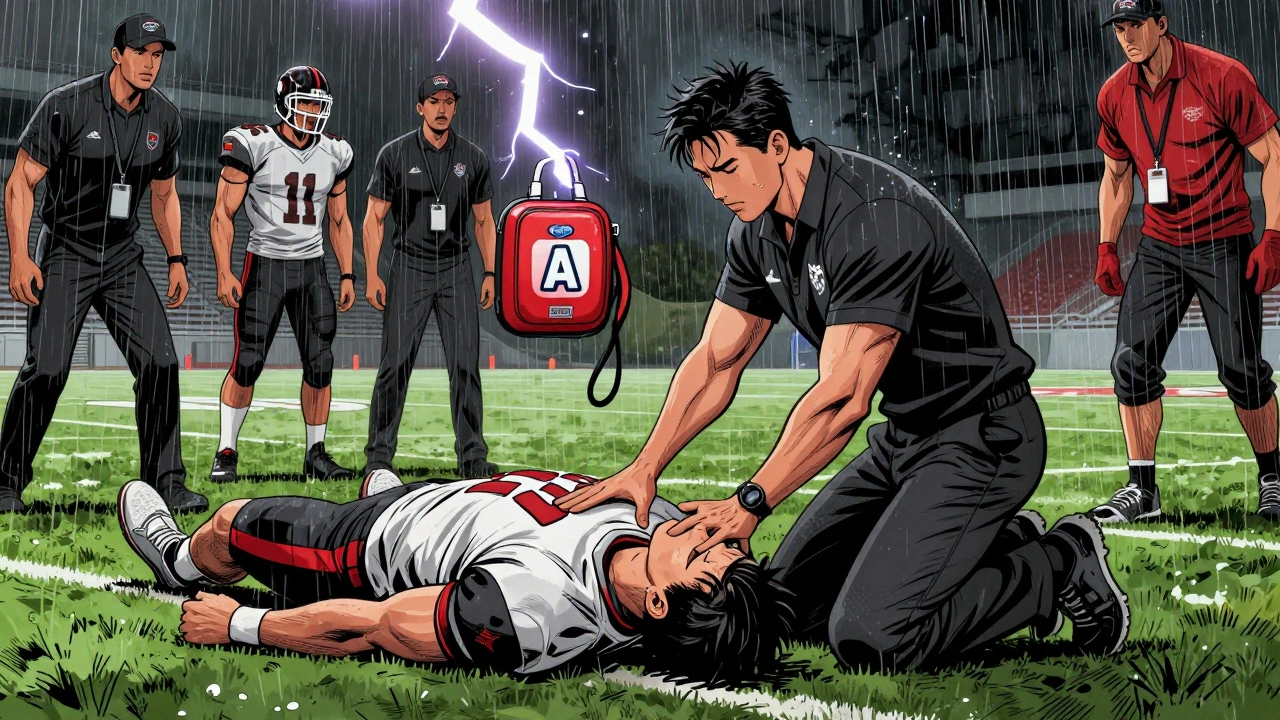
- Emergency Care and CPR - You’ll train in on-field protocols. What do you do if a player collapses on the field? How do you manage a spinal injury before EMS arrives? Certification in CPR and AED use is required before you can even step into a clinical rotation.
- Psychology of Sport and Injury - Recovery isn’t just physical. Athletes often struggle with fear, frustration, or identity loss after a major injury. You’ll learn communication techniques to help them stay motivated and mentally healthy during rehab.
- Orthopedic Assessment and Rehabilitation - This is where you learn to test joint stability, measure range of motion, and design rehab progressions. You’ll use tools like goniometers, dynamometers, and balance plates. Every rehab plan is customized - no two athletes recover the same way.
How Clinical Rotations Work
Classroom learning only takes you so far. By your second year, you’ll start clinical rotations. These aren’t shadowing gigs - you’re expected to perform tasks under supervision.
You might spend a semester at a local high school, taping ankles before practice and documenting injury reports. Then you could move to a university athletic department, helping with pre-season screenings and managing rehab for Division I athletes. Some programs partner with professional teams or physical therapy clinics.
By graduation, you’ll have logged at least 800-1,000 hours of direct clinical experience. That’s more than most new physical therapists have when they start.
What You Won’t Learn (But Should Know)
Many students enter these programs thinking they’ll spend all day with athletes. But a big part of the job is paperwork, insurance claims, scheduling, and communicating with coaches and parents. You’ll take courses in healthcare administration and ethics. You’ll learn how to write SOAP notes (Subjective, Objective, Assessment, Plan), which are used in every medical setting.
You’ll also learn about legal responsibilities. If you clear an athlete to return too soon and they get hurt again, you could be held liable. That’s why documentation and evidence-based decision-making are drilled into you from the start.
How This Curriculum Prepares You for Certification
In the U.S., you must pass the Board of Certification (BOC) exam to become a Certified Athletic Trainer (ATC). In New Zealand, you’ll work toward registration with the Physiotherapy Board under the Health Practitioners Competence Assurance Act.
The curriculum is built to align with these exams. You’ll study the same domains: prevention, clinical evaluation, immediate care, treatment/rehabilitation, and professional responsibility. The exam isn’t just multiple choice - it includes case studies and practical simulations.
Programs that don’t cover these areas thoroughly have low pass rates. That’s why accredited programs track their BOC pass rates closely - it’s one of the main ways they’re held accountable.
What Comes After Graduation?
Graduating doesn’t mean you’re done learning. Most athletic trainers pursue continuing education. You might specialize in:
- Concussion management
- Performance enhancement for elite athletes
- Working with youth sports populations
- Rehabilitation in military or first responder settings
Some go on to earn a master’s degree. Others move into roles like sports performance coach, clinic director, or even work with the military or NASA on injury prevention for astronauts.
Jobs are growing. The U.S. Bureau of Labor Statistics projects a 17% increase in athletic training positions by 2031 - faster than average. In New Zealand, demand is rising as more schools and community clubs invest in proper sports health services.
Who This Career Is For (And Who It’s Not)
It’s not for people who want a 9-to-5 job. You’ll work evenings, weekends, and holidays. You’ll be on the sidelines in the rain. You’ll deal with angry parents, tired coaches, and athletes who skip rehab.
But if you love being part of a team - not just the players, but the whole support system - and you care about helping people move again after injury, this is one of the most rewarding paths in health care. You won’t be famous. But the athletes you help? They’ll remember you.
How to Choose the Right Program
Not all programs are created equal. Here’s what to look for:
- CAATE accreditation - This is non-negotiable if you want to sit for the BOC exam in the U.S. or equivalent certification elsewhere.
- Clinical placement options - Does the program have partnerships with schools, colleges, or clinics? More access means more real experience.
- Pass rates - Ask for the last three years’ BOC or national certification pass rates. Anything below 80% is a red flag.
- Faculty experience - Are instructors still working in the field? Or are they only teaching? Hands-on professionals bring real stories and updated practices.
- Student-to-faculty ratio - Smaller ratios mean more individual feedback and better learning.
Don’t just pick the cheapest or closest option. This career requires precision, judgment, and responsibility. Your education needs to match that.
Final Thoughts: It’s More Than a Job
Sports medicine and athletic training is a blend of science, empathy, and grit. You’ll need to understand biomechanics, but you’ll also need to know how to talk to a 16-year-old who’s terrified they’ll never play again. You’ll need to read an X-ray, but you’ll also need to calm a coach who’s pressuring you to clear an athlete too soon.
The curriculum is demanding. The hours are long. The pay isn’t always great - especially early on. But if you’re drawn to the quiet moments after a game, when you help someone take their first steps without pain, then this isn’t just a career. It’s a calling.
What’s the difference between athletic training and physical therapy?
Athletic trainers focus on prevention, immediate care, and return-to-play for athletes. They’re often the first to respond on the field and work daily with teams. Physical therapists specialize in rehabilitation after injury or surgery, often in clinical settings. PTs typically need a doctorate, while athletic trainers usually hold a bachelor’s or master’s. The roles overlap, but their primary focus and work settings differ.
Can I become an athletic trainer without a degree?
No. Since 2016, the BOC in the U.S. has required a master’s degree for certification. In New Zealand, registration requires completion of an accredited program and passing a national competency exam. Entry-level positions now require at least a bachelor’s, but most employers prefer or require a master’s. There’s no shortcut.
Do I need to be an athlete to do this job?
Not at all. While many athletic trainers have played sports, it’s not a requirement. What matters is your understanding of human movement, your ability to assess injury, and your communication skills. Some of the best trainers have never competed - they just have a deep curiosity about how the body works.
How much does it cost to get certified?
In the U.S., the BOC certification exam costs around $525. Renewal fees are $125 every two years. In New Zealand, registration with the Physiotherapy Board costs about NZD $600 annually. Tuition for a bachelor’s program ranges from $15,000 to $40,000 depending on the school and location. Scholarships and assistantships are often available to offset costs.
What’s the job outlook for athletic trainers?
Demand is rising. In the U.S., employment is projected to grow 17% through 2031. In New Zealand, schools, community sports clubs, and even corporate wellness programs are hiring more athletic trainers. The trend toward injury prevention and return-to-play protocols is creating new roles outside traditional sports settings - including in dance, military, and occupational health.
Comments
Jeremy Chick
Y’all act like this job is just taping ankles and handing out Gatorade. Nah. I’ve seen ATs pull kids off the field after a collision, stabilize a spinal injury, and calm down a screaming parent-all before the EMTs even show up. This ain’t sidekick work. It’s life-saving. And yeah, it’s exhausting. But when you see a kid walk again after a torn ACL? Worth every sleepless night.
Christina Kooiman
Let me just say, as someone who has spent 17 years correcting grammar in medical documentation, the misuse of 'affect' vs. 'effect' in student reports is a national disgrace. And don't even get me started on the inconsistent capitalization of 'athletic trainer'-it's either capitalized or not depending on the mood of the writer. This profession needs standardization, not just accreditation. Also, SOAP notes are not a suggestion. They are a lifeline. And if you can't write them properly, you shouldn't be near a patient. Period.
michael T
Bro, I had a trainer in college who literally cried when his star QB got hurt. Like, full-on ugly sobbing. And then he spent 3 months rehabbing him like he was his own son. Dude got fired for ‘emotional overinvolvement.’ But you know what? That guy saved that kid’s career-and maybe his life. You think this job is about protocols? Nah. It’s about showing up when no one else will. Even when it breaks your heart. Even when the coach yells at you. Even when the insurance company denies the claim. You still show up. That’s the real curriculum.
Stephanie Serblowski
Okay but have y’all seen the new kinesio taping trends? 😅 Like, I get it-colorful patterns look cool on Instagram-but half the time it’s just placebo with glitter. That said, I’ve seen a hamstring strain heal 30% faster with proper load progression + tape + a therapist who actually listens. So… maybe the tech works if the human does? 🤷♀️ Also, shoutout to all the ATs working in rural high schools with $200 budgets. Y’all are legends.
Renea Maxima
What if the whole model is wrong? We treat athletes like machines that break and need fixing. But what if injury is the body’s way of saying ‘stop’? What if we’re not healing them-we’re just training them to ignore pain until they collapse? And who benefits from this? The NCAA? The shoe companies? The coaches with bonus structures tied to wins? We’ve turned human beings into performance metrics. And we call it ‘sports medicine.’
E Jones
Did you know the BOC exam is designed by a consortium that includes Nike and the NFL? Yeah. They help write the questions. And guess what? They don’t want you to question the system. They want you to tape, ice, and clear athletes FAST. Why? Because downtime = lost revenue. The ‘evidence-based’ stuff? Half of it’s funded by gear manufacturers. The real curriculum? Learn how to sign the paperwork so the insurance doesn’t deny it. Learn how to say ‘it’s safe’ even when you’re not sure. That’s the real test.
Barbara & Greg
It is deeply concerning that the profession continues to prioritize clinical hours over ethical training. One cannot simply learn to assess a concussion without first understanding the moral implications of clearing an athlete under pressure. The curriculum must include mandatory modules on power dynamics, institutional coercion, and the psychological toll of being the gatekeeper between profit and person. Until then, we are not educating healers-we are training compliant technicians.
selma souza
There is no excuse for improper comma usage in clinical documentation. Period. If you write ‘the athlete was seen, and complained of pain’ without a serial comma, you are not fit to handle a sprain. Furthermore, the term ‘athletic trainer’ is not a title to be casually abbreviated. It is a protected credential. And if your program doesn’t require you to submit a 10-page annotated bibliography on the history of CAATE standards, then it is failing its students. I’ve reviewed 47 curricula. Only 3 met my standards.
Michael Jones
They say you gotta love the game to do this job but honestly I think you gotta love the people more than the game. I’ve seen trainers sit with a freshman who just got cut from the team because she tore her ACL and cried for an hour because she thought her life was over. That’s not in the syllabus. That’s not on the BOC test. But it’s the part that matters. You don’t fix knees. You fix hope. And that’s the only certification that lasts.
allison berroteran
I’ve been an AT for 12 years and I still learn something every day. I used to think it was all about the science-until I worked with a dancer who had chronic ankle instability. She wasn’t healing because of the rehab protocol. She was healing because I asked her what she missed most about dancing-not what muscle was weak. Turns out, she missed the music. So we started doing rehab to songs she loved. And she came back stronger. The curriculum teaches you how to fix the body. But the real magic? It’s in listening to the soul behind the injury.
Gabby Love
Quick note for anyone considering this path: shadow an AT in a high school before you commit. You’ll be doing everything from writing insurance forms at 7 a.m. to calming down a mom who thinks her kid’s ACL tear is the school’s fault. You’ll get no credit. You’ll get paid peanuts. But you’ll also be the reason a kid gets to walk across the stage at graduation instead of using a cane. That’s the quiet reward. No applause. Just a text three years later saying ‘thank you for not giving up on me.’
Jen Kay
Let’s be real-most of us got into this because we were the ones who stayed late to tape ankles after practice. We didn’t do it for the pay. We did it because someone once did it for us. And now? We’re the ones getting yelled at for ‘delaying’ a return-to-play because we’re waiting for a neurocognitive baseline. So yes, the system is broken. But we’re still here. Still showing up. Still doing the work. And if you’re reading this and thinking about it? Come on in. The water’s cold. But it’s worth it.
Michael Thomas
USA best. New Zealand? Cute. But we have the real system. CAATE is the gold standard. Everything else is a copycat. You want to be an AT? Come to the US. Learn from the best. Stop romanticizing small countries with 5 million people and 300 ATs. We’ve got 50,000. We’ve got the data. We’ve got the money. We’ve got the culture. You want to be a real professional? Train here. Period.
Abert Canada
Man I did my rotation in a First Nations community up north. The AT there didn’t even have a proper table. Just a folding chair and a first aid kit. But she knew every kid’s name, their mom’s name, their favorite snack, and which ones were scared of the clinic. She used traditional healing practices alongside kinesiology tape. Didn’t follow CAATE to the letter. But she saved more kids than any fancy university clinic. Sometimes the best curriculum is the one that listens to the land and the people.