


Imagine you are sitting at your desk, staring at a blank screen. On one side, there is a calendar notification for a live webinar starting in ten minutes. On the other side, there is a folder full of video lectures and reading materials that you can tackle whenever you have free time. This is the central dilemma of modern online education is the delivery of instruction through digital platforms rather than physical classrooms. It forces a choice between two distinct approaches: synchronous and asynchronous learning. Neither method is inherently superior; they simply serve different needs, schedules, and learning styles. Understanding the mechanics of each will help you decide which path leads to better outcomes for your specific situation.
Understanding Synchronous Learning
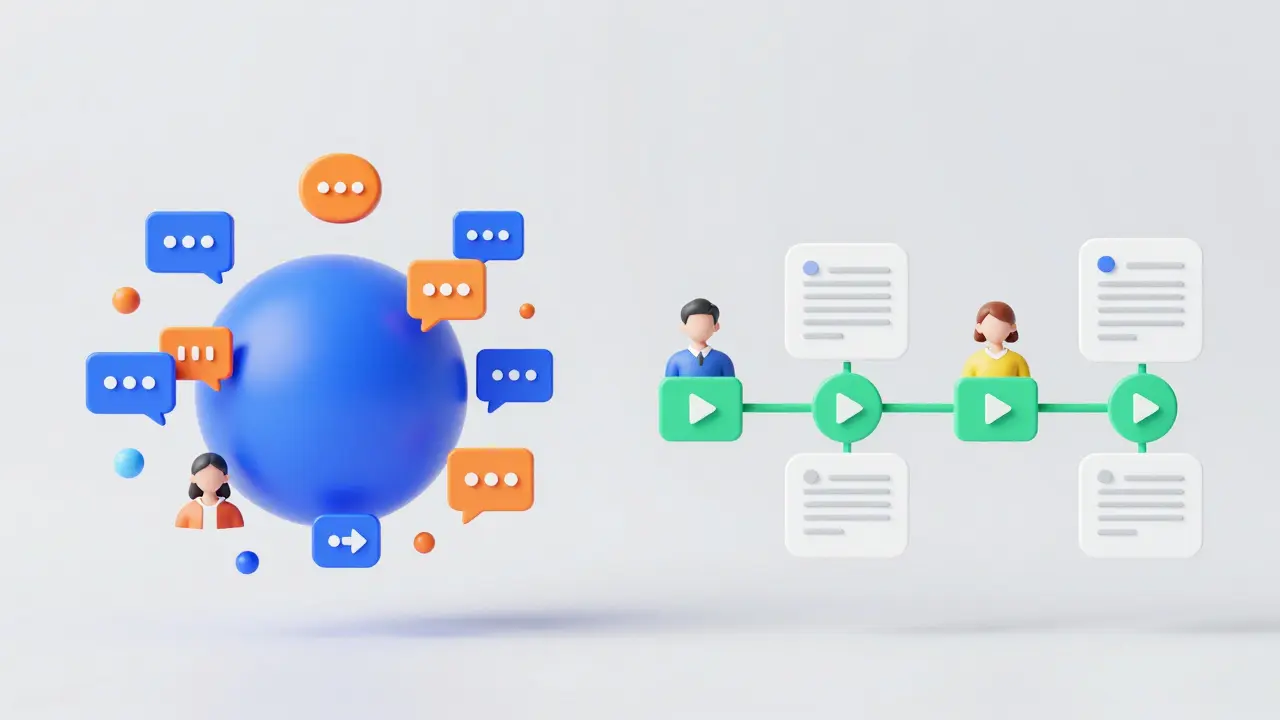
Synchronous learning happens in real-time. When you participate in this mode, everyone involved-students and instructors alike-is present at the same moment. Think of it as a traditional classroom experience, but transported to your living room via a computer or tablet. The core mechanism relies on immediate interaction. If you have a question during a lecture, you can type it into the chat box or unmute your microphone to ask directly. The instructor responds instantly, clarifying confusion before it solidifies into misunderstanding.
This method thrives on structure. Most synchronous programs operate on a fixed schedule. You might log in every Tuesday and Thursday at 6:00 PM EST for a two-hour session. This rigidity provides a sense of routine that many learners find comforting. It mimics the external discipline of a physical school environment, reducing the temptation to procrastinate. For those who struggle with self-motivation, the presence of peers and an active teacher creates accountability. You show up because others expect you to be there.
The technology behind synchronous learning has evolved significantly. Platforms like Zoom, Microsoft Teams, and specialized learning management systems (LMS) now offer robust features such as breakout rooms, whiteboards, and live polling. These tools facilitate collaboration, allowing small groups to work together on projects while the instructor monitors progress. However, this immediacy comes with a cost: flexibility. If you miss a live session due to illness, travel, or work commitments, you fall behind immediately. Catching up requires watching recordings, which often lack the interactive nuance of the original event.
The Mechanics of Asynchronous Learning
In contrast, asynchronous learning removes the constraint of time. There are no mandatory login hours. Instead, you engage with course materials on your own schedule. A typical week might involve watching pre-recorded video lectures on Sunday night, completing a quiz on Wednesday afternoon, and posting a discussion reply on Friday morning. The key difference is that interaction is delayed. You might post a question in a forum and receive answers from peers or instructors hours or even days later.
This approach demands a high degree of self-discipline. Without the external pressure of a live class, you must create your own structure. Successful asynchronous learners treat their studies like a part-time job, blocking out specific times in their calendars for deep work. The freedom to learn at your own pace is both its greatest strength and its biggest pitfall. If you are a fast reader, you can breeze through modules quickly. If you need more time to digest complex concepts, you can pause, rewind, and re-read without holding up the rest of the class.
Asynchronous courses rely heavily on well-designed content. Since the instructor is not physically present to gauge comprehension through body language, the materials must be exceptionally clear. High-quality video production, comprehensive written guides, and automated quizzes become essential tools. Discussion boards play a critical role here, serving as the primary venue for peer-to-peer interaction. While these conversations lack the spontaneity of face-to-face dialogue, they often allow for more thoughtful, researched responses. Participants have time to reflect before typing their thoughts, leading to deeper intellectual engagement.
Comparing Key Factors: Flexibility, Interaction, and Pace
| Factor | Synchronous Learning | Asynchronous Learning |
|---|---|---|
| Schedule Flexibility | Low; requires attendance at set times | High; learn anytime, anywhere |
| Interaction Speed | Immediate feedback and clarification | Delayed responses via forums or email |
| Pacing | Fixed; moves at the speed of the group | Self-directed; adjust speed to personal needs |
| Time Zone Compatibility | Challenging for global participants | Ideal for international or diverse locations |
| Social Connection | Stronger sense of community and camaraderie | Weaker social bonds; more isolated experience |
| Technical Requirements | Stable internet for real-time streaming | Basic access for downloading/viewing content |
The table above highlights the trade-offs inherent in each model. Flexibility is the defining advantage of asynchronous learning, making it ideal for working professionals, parents, or students in different time zones. However, this freedom often comes at the expense of social connection. Building relationships with peers is harder when interactions are limited to text-based forums. Conversely, synchronous learning fosters a stronger sense of community. The shared experience of attending a live class creates bonds that can last beyond the course duration. Yet, this social benefit requires sacrificing the ability to balance education with unpredictable life events.
Who Should Choose Synchronous Learning?
You are likely a good candidate for synchronous learning if you thrive on structure and prefer direct human interaction. This method works best for individuals who struggle with procrastination or who find motivation in the energy of a live group. If you are studying a subject that requires immediate feedback, such as public speaking, foreign language pronunciation, or laboratory sciences, synchronous sessions are often indispensable. Real-time correction helps prevent the reinforcement of bad habits.
Additionally, consider your technical setup. Synchronous learning demands a reliable, high-speed internet connection. Buffering during a live exam or dropping out of a crucial discussion can be frustrating and detrimental to your grade. If you have access to a quiet space and stable technology, and if your schedule allows for consistent availability, synchronous learning can provide a rich, immersive educational experience that closely mirrors traditional schooling.
Who Should Choose Asynchronous Learning?
Asynchronous learning is the optimal choice for those with demanding or irregular schedules. Parents caring for young children, full-time employees, or individuals managing health issues often find that the rigid timetable of synchronous classes is untenable. The ability to pause a lecture to answer the door or finish a task before diving back into study material offers a level of accommodation that synchronous models cannot match.
This method also suits independent learners who possess strong time-management skills. If you know how to prioritize tasks and meet deadlines without external supervision, asynchronous learning allows you to maximize efficiency. You can accelerate through topics you already understand and spend extra time on challenging concepts. Furthermore, if you are an introvert who feels anxious speaking up in large groups, the reflective nature of asynchronous discussions may allow you to contribute more effectively than in a fast-paced live setting.
The Hybrid Approach: Blending the Best of Both Worlds
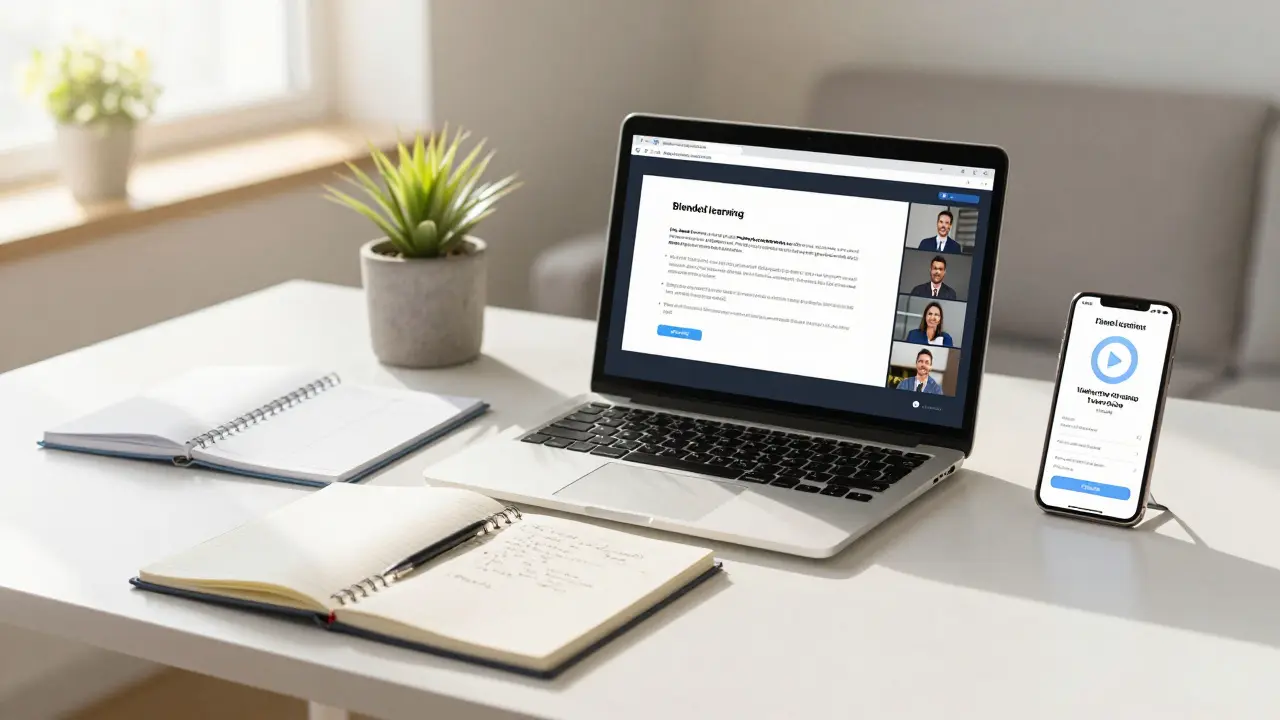
Increasingly, educational institutions and corporate training programs are adopting a hybrid model, often referred to as blended learning. This approach combines the structural benefits of synchronous sessions with the flexibility of asynchronous materials. For example, a course might require weekly live seminars for Q&A and group projects, while assigning recorded lectures and readings to be completed independently. This strategy aims to mitigate the weaknesses of each standalone method.
In a hybrid model, the live sessions are used for high-value interactions that require real-time engagement, such as debates, presentations, or complex problem-solving. The foundational knowledge is delivered asynchronously, allowing students to absorb information at their own pace before applying it in live settings. This reduces "Zoom fatigue" by minimizing the time spent passively listening to lectures online. Instead, screen time is reserved for active participation. For many learners, this balanced approach provides the ideal compromise, offering both community and convenience.
Tips for Success in Either Format
Regardless of which method you choose, success depends on proactive engagement. Here are practical strategies to enhance your learning experience:
- Create a dedicated study space. Whether you are joining a live class or watching a recording, having a consistent, distraction-free environment signals to your brain that it is time to focus.
- Establish a routine. Even in asynchronous learning, set regular hours for study. Treating education like a job improves consistency and retention.
- Participate actively. In synchronous classes, ask questions and use the chat. In asynchronous courses, post thoughtful comments on discussion boards. Engagement drives deeper understanding.
- Manage your time wisely. Use calendars and planners to track deadlines. Break larger assignments into smaller, manageable tasks to avoid last-minute stress.
- Seek feedback early. Do not wait until the final project to check your understanding. Reach out to instructors or peers if you feel confused about the material.
Conclusion: Making the Right Choice
There is no universal winner in the debate between synchronous and asynchronous learning. The best method is the one that aligns with your lifestyle, learning preferences, and goals. If you value community, immediate feedback, and structured routines, synchronous learning will likely serve you well. If you prioritize flexibility, self-paced progression, and the ability to balance multiple responsibilities, asynchronous learning is the superior option. Many successful learners eventually find that a combination of both yields the best results. By understanding the strengths and limitations of each approach, you can design an educational journey that fits your unique circumstances, ensuring that you not only complete your courses but truly master the material.
Is synchronous or asynchronous learning better for career advancement?
Neither is inherently better for career advancement. Asynchronous learning is often preferred by working professionals because it allows them to continue earning while studying. However, synchronous learning can provide valuable networking opportunities with peers and instructors, which can lead to job referrals. The impact on your career depends more on the quality of the program and your application of the skills learned than on the delivery method itself.
Can I switch between synchronous and asynchronous modes in the same course?
It depends on the institution. Some programs offer a hybrid model where switching is built into the curriculum. Others strictly define the format at the start. If you are struggling with the scheduled times of a synchronous course, contact your academic advisor immediately. They may be able to offer accommodations or suggest alternative sections, but mid-course switches are rarely permitted without significant justification.
How do I stay motivated in asynchronous learning?
Motivation in asynchronous learning requires intentional habit-building. Set specific daily or weekly goals for your study time. Join online study groups or forums related to your course to create a sense of community. Use productivity techniques like the Pomodoro method to maintain focus. Additionally, remind yourself of the long-term benefits of your education to keep your purpose clear when discipline wanes.
Are synchronous classes more rigorous than asynchronous ones?
Not necessarily. The rigor of a course is determined by its curriculum, assessment standards, and accreditation, not by its delivery format. Both synchronous and asynchronous courses can be highly challenging. Asynchronous courses often require greater self-discipline, which some argue makes them mentally tougher. Synchronous courses demand real-time performance, which can be stressful. Evaluate the syllabus and learning outcomes to gauge difficulty, rather than assuming one format is easier.
What technology do I need for synchronous learning?
For synchronous learning, you need a device with a webcam and microphone, such as a laptop or tablet, and a stable, high-speed internet connection. A wired Ethernet connection is preferable to Wi-Fi to minimize lag. You should also ensure you have the necessary software installed, such as Zoom, Microsoft Teams, or your institution's specific LMS platform. A quiet environment with good lighting enhances your participation and professionalism.