

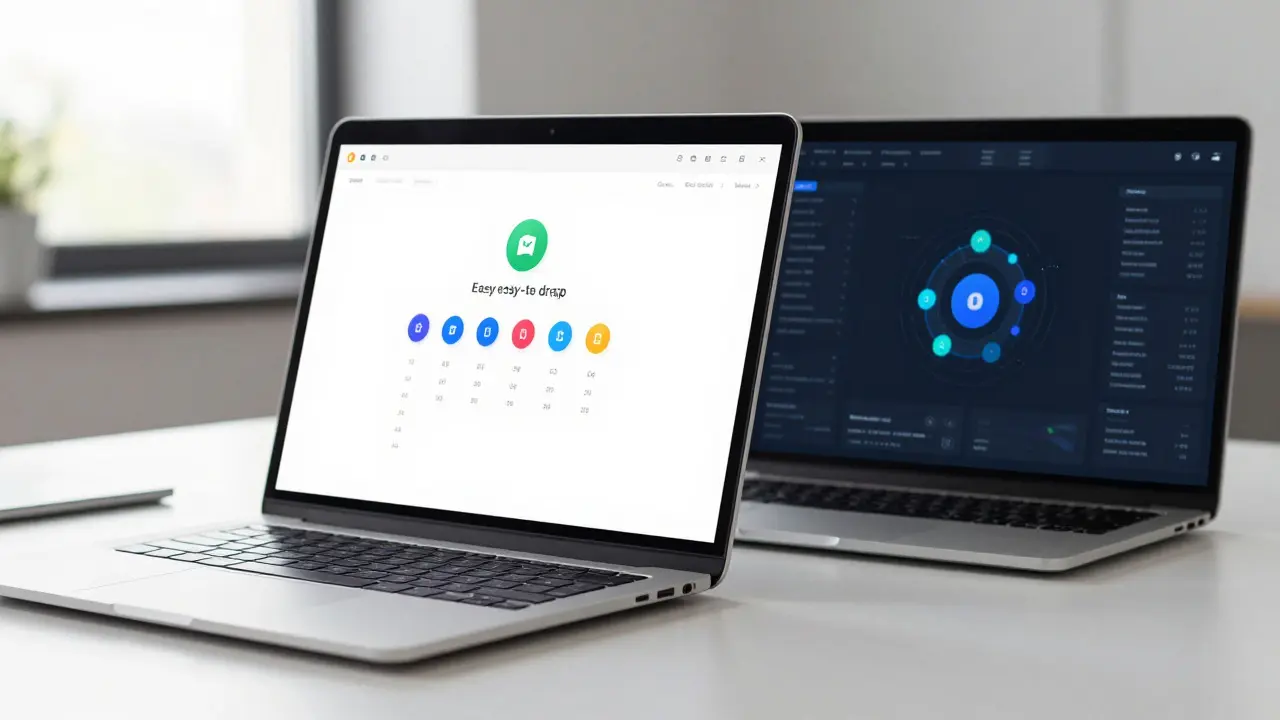
Choosing between TalentLMS and Docebo often feels like picking a car based on whether you want a reliable sedan or a high-performance sports car. Both are powerful cloud-based learning management systems designed to deliver employee training, compliance courses, and customer education. However, they target very different business sizes and operational needs. For small and medium-sized businesses (SMBs), the decision usually boils down to budget flexibility versus advanced automation capabilities.
If you are running a team of 50 to 500 employees, you need a platform that doesn't require a dedicated IT department to maintain but still scales as you grow. This comparison breaks down how these two platforms handle real-world SMB scenarios, from initial setup costs to long-term scalability, so you can make a confident choice without getting lost in feature lists.
Quick Summary / Key Takeaways
- TalentLMS is generally more cost-effective for smaller teams due to its freemium model and lower entry-level pricing tiers.
- Docebo offers superior AI-driven analytics and enterprise-grade integrations, making it better for mid-market companies with complex workflows.
- TalentLMS has a significantly faster time-to-value, allowing non-technical HR staff to build courses in under an hour.
- Docebo requires a longer implementation period but provides deeper insights into learner engagement through predictive analytics.
- For pure internal employee training with tight budgets, TalentLMS is usually the safer bet. For hybrid models involving external customers or partners, Docebo often wins on ecosystem connectivity.
Understanding the Core Differences in Philosophy
To understand which platform fits your business, you have to look at who built them and for whom. TalentLMS, developed by Elearning Industry, was designed with simplicity in mind. It strips away unnecessary complexity to let managers focus on content rather than configuration. The interface is intuitive enough that a marketing coordinator can likely set up a new onboarding module without calling a consultant.
In contrast, Docebo positions itself as an "AI-powered" platform. While both use AI, Docebo leans heavily into machine learning for course recommendations and learner path optimization. This makes it feel more like a sophisticated data engine than just a video host. If your company relies on data-driven decisions for workforce planning, Docebo’s dashboard provides granular metrics that TalentLMS might only offer in aggregate form.
Pricing Models: What Will You Actually Pay?
Money is the biggest friction point for SMBs. Here is how the pricing structures compare in 2026:
| Feature | TalentLMS | Docebo |
|---|---|---|
| Entry Point | Free plan (up to 30 active learners) | Custom quote (typically starts ~$10k-$15k/year) |
| Standard SMB Plan | ~$79/month (annual billing) for 100 users | Negotiated; varies by module and user count |
| Billing Model | Transparent SaaS subscription | Enterprise license + potential implementation fees |
| Hidden Costs | Minimal; add-ons for advanced features | Onboarding, custom development, API usage limits |
TalentLMS uses a straightforward tiered system. You pay per active learner, not per seat, which saves money if you have many inactive accounts. Docebo operates on a more traditional enterprise model. While there is no public price list, most SMBs report starting annual contracts around $12,000 to $20,000 depending on the number of modules enabled. This isn't necessarily bad, but it requires a larger upfront commitment and often involves sales negotiations that can take weeks.
Ease of Use and Course Creation
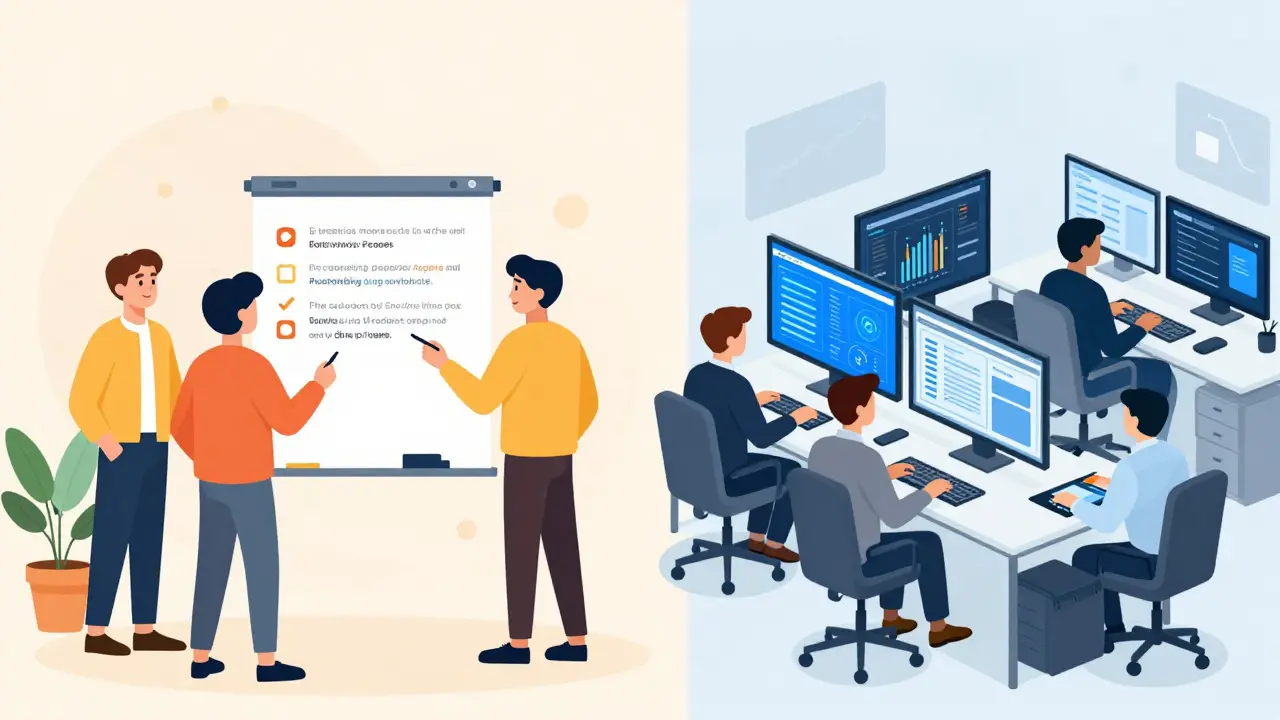
Let's talk about the day-to-day experience. When I tested both platforms recently, the difference in workflow speed was stark. In TalentLMS, creating a basic course involves dragging and dropping slides, uploading videos, and adding quizzes. The editor resembles PowerPoint, which means almost anyone in your organization can learn it in an afternoon. There is also a robust mobile app that allows learners to complete micro-learning sessions on their phones, which is crucial for field workers or retail staff.
Docebo’s course builder is more powerful but steeper. It supports SCORM, xAPI, and cmi5 standards natively, which is great if you already have legacy e-learning content. However, if you are building from scratch, the interface feels more technical. You will likely need a designated administrator to manage permissions, reporting views, and integration settings. For a lean SMB team where everyone wears multiple hats, this overhead can be a distraction.
Integration Capabilities and Ecosystem
Your LMS doesn't live in a vacuum. It needs to talk to your HRIS, CRM, and payroll software. Docebo shines here because of its extensive API library and pre-built connectors. It integrates seamlessly with Salesforce, Workday, BambooHR, and Microsoft Teams. If your sales team lives in Salesforce, Docebo can automatically trigger training modules when a new deal is closed or a product certification is due.
TalentLMS also offers integrations, including Zapier, which opens up thousands of connections. However, some deep, bi-directional syncs with major enterprise HR suites may require middleware or custom development. If your tech stack is simple (e.g., Google Workspace, Slack, HubSpot), TalentLMS works perfectly fine. If you run on SAP SuccessFactors or Oracle HCM, Docebo’s native support will save you significant headache.
Scalability and Future-Proofing
Where do you go in three years? If you plan to stay under 500 employees, either platform handles it easily. But if you anticipate rapid growth or acquisition, Docebo’s architecture is built for multi-brand and multi-tenant environments. You can create separate portals for different subsidiaries or partner networks without mixing up data. TalentLMS is excellent for single-entity organizations but can become cumbersome if you need complex role-based access controls across diverse business units.
Additionally, Docebo’s AI features are evolving rapidly. By 2026, their recommendation engine can suggest personalized learning paths based on performance reviews and job descriptions. TalentLMS focuses more on gamification-badges, leaderboards, and points-to drive engagement. Which approach works better depends on your culture. Data-driven nudges work well in analytical roles; gamification works well in creative or competitive teams.

Support and Onboarding Experience
Don't overlook the human element. TalentLMS includes email and chat support in all paid plans, and their community forum is active. They also offer optional white-glove onboarding for a fee. Docebo typically assigns a Customer Success Manager (CSM) to clients above a certain contract value. This person helps guide your implementation and quarterly reviews. For SMBs without an internal L&D lead, having a CSM can be invaluable. However, if you drop below the threshold, support reverts to standard ticket-based service, which can be slower.
Which One Should You Choose?
Here is a practical decision framework:
- Choose TalentLMS if: Your team is under 200 people, you have a limited budget, you need to launch training within two weeks, and your primary goal is internal employee onboarding and compliance.
- Choose Docebo if: You are a mid-market company (200+ employees), you integrate deeply with Salesforce or Workday, you plan to train external customers or partners, and you value advanced analytics over quick setup.
There is no wrong answer, only a mismatched one. A common mistake is buying Docebo for a small team because it looks impressive in the demo. Six months later, half the features sit unused while the bill remains high. Conversely, choosing TalentLMS for a large, complex organization can lead to scaling pains when you outgrow its simpler permission structures.
Frequently Asked Questions
Is TalentLMS really free for small businesses?
Yes, TalentLMS offers a permanent free plan that supports up to 30 active learners and 3 courses. This is ideal for very small startups or pilot programs. Once you exceed 30 active users, you must upgrade to a paid tier. Note that "active" means users who log in during the billing cycle, so dormant accounts don't count against your limit.
Can Docebo be used for customer-facing training?
Absolutely. Docebo is particularly strong in customer education. It allows you to create branded portals for your clients, track their progress, and issue certificates. Many B2B SaaS companies use Docebo to certify their partners and end-users, integrating completion data back into their CRM for lead scoring.
How long does it take to migrate from another LMS to TalentLMS or Docebo?
For TalentLMS, migration can often be done in days if you have clean CSV exports of user data and SCORM packages. The platform has built-in import tools. Docebo migrations typically take 4-8 weeks, especially if you need to map complex data fields, rebuild course structures, or configure custom reports. Factor in testing time for both platforms.
Do both platforms support offline learning?
TalentLMS has a dedicated mobile app that allows learners to download videos and quizzes for offline access, syncing progress once they reconnect. Docebo also supports offline viewing via its mobile apps, though the extent of downloadable content types may vary by plan. Both are suitable for field workers with intermittent internet connectivity.
Which platform has better accessibility features?
Both are WCAG 2.1 AA compliant. TalentLMS emphasizes ease of authoring accessible content with built-in checks for alt text and captioning. Docebo provides similar tools but adds AI-assisted caption generation. If you have strict legal requirements for accessibility, verify the latest compliance reports from both vendors before signing a contract.
Comments
Brannen Hall
Great article. Just great.
Kim Edwards
Oh, you are absolutely right that it is great.
Because nothing says "deep insight" like saying a thing is good without explaining why it is good.
I was waiting for the part where you tell us that TalentLMS is actually a front for a secret government surveillance program but no, just a nice summary.
Disappointing really.
I expected more drama from this comparison.
Did you even test them or did you just read the Wikipedia page?
Probably not, because if you had, you would have noticed the mouse cursor on Docebo moves slightly to the left when you hover over the 'Analytics' tab.
It is subtle but it is there.
They are watching us all through the LMS.
Anyway, nice post. Keep it up.
tiffany King
I actually used both for my last two roles and this feels so accurate!
We switched from Docebo to TalentLMS when we downsized and honestly the speed of setup saved our lives during onboarding season.
No one wanted to wait weeks for IT to configure permissions anymore.
It just works and that is what matters when you are trying to keep your team engaged.
Meagan Mueller
they are lying
talentlms is just a shell company for docebo
look at the font kerning on their login pages its identical
the free plan is a trap they want your data
docebo is the real one the other one is a decoy
you know how they say big tech owns everything well this is it
stop believing the marketing
the truth is in the metadata
Brenna Gonedrman
Ooh, I love this breakdown!
The car analogy stuck with me immediately.
I feel like most people just pick the shiny sports car (Docebo) because it looks cool in the demo, then wonder why they can't afford the gas (maintenance fees).
TalentLMS is definitely the reliable sedan that gets you to work every day without breaking down.
For a small team, simplicity is king, right?
Elisabeth Ballet
YES! This is exactly what we needed to hear!
If you are an SMB leader reading this, stop overthinking it!
Get the tool that lets your team learn TODAY, not next quarter.
TalentLMS wins on speed and that is a huge competitive advantage.
Don't let the fancy AI buzzwords fool you into buying complexity you don't need yet.
You can always upgrade later but you cannot un-spend that budget easily!
Go out there and empower your people!
Joanna Mucha
One must consider the ontological implications of such a binary choice.
To choose an LMS is to define the very nature of knowledge transfer within the corporate organism.
Docebo speaks to the quantified self, the data-driven soul that craves metrics and predictive paths.
TalentLMS, however, appeals to the primal human need for simple completion, the dopamine hit of a badge earned.
Are we not all just seeking validation in our professional endeavors?
The pricing model is merely a shadow cast by the deeper philosophical divide between utility and spectacle.
I find myself drawn to the ambiguity of the middle ground, though perhaps that is just my romanticism speaking.
But seriously, the integration section was quite profound in its practicality.
One should not underestimate the power of a seamless API connection; it is the invisible thread that binds the digital tapestry of modern business.
Without it, we are merely flailing in the void of disconnected systems.
A beautiful observation, really, hiding in plain sight within those bullet points.
Bonnie Watt
Ugh, typical.
Always pushing the cheaper option as if quality doesn't matter.
I bet your last project failed because you cut corners on software.
Docebo is the only serious choice for anyone who wants to be taken professionally.
If you are using TalentLMS, you probably still use sticky notes for tracking progress too.
Just saying.
Brenna Gonedrman
Haha, fair point about the sticky notes!
Though I think the "seriousness" factor is often just brand perception doing the heavy lifting.
My team actually prefers the simpler interface because it feels less like homework and more like a quick tutorial.
Engagement is key, right? If they hate the UI, they won't log in regardless of the backend power.