


You’ve booked your flight. You’ve packed your bags. But before you can actually step onto that plane to study abroad or start a new job in London, Sydney, or Toronto, there’s one massive hurdle standing in your way: the English proficiency test. Whether it is the Test of English as a Foreign Language (TOEFL) or the International English Language Testing System (IELTS), these exams are gatekeepers. They don’t care how well you can order coffee or chat with friends. They care if you can write a coherent essay under time pressure and understand a fast-talking professor.
Most people fail their first attempt not because they have bad English, but because they treat the test like a generic language class. It isn’t. It’s a specific game with specific rules. A proper prep course doesn’t just teach you grammar; it teaches you the architecture of the exam. If you’re looking at test preparation courses, you need to know what’s inside them and how to use them effectively. Let’s break down the actual syllabus you’ll encounter and give you the gritty, real-world tips that textbooks often miss.
Decoding the Syllabus: What Are You Actually Studying?
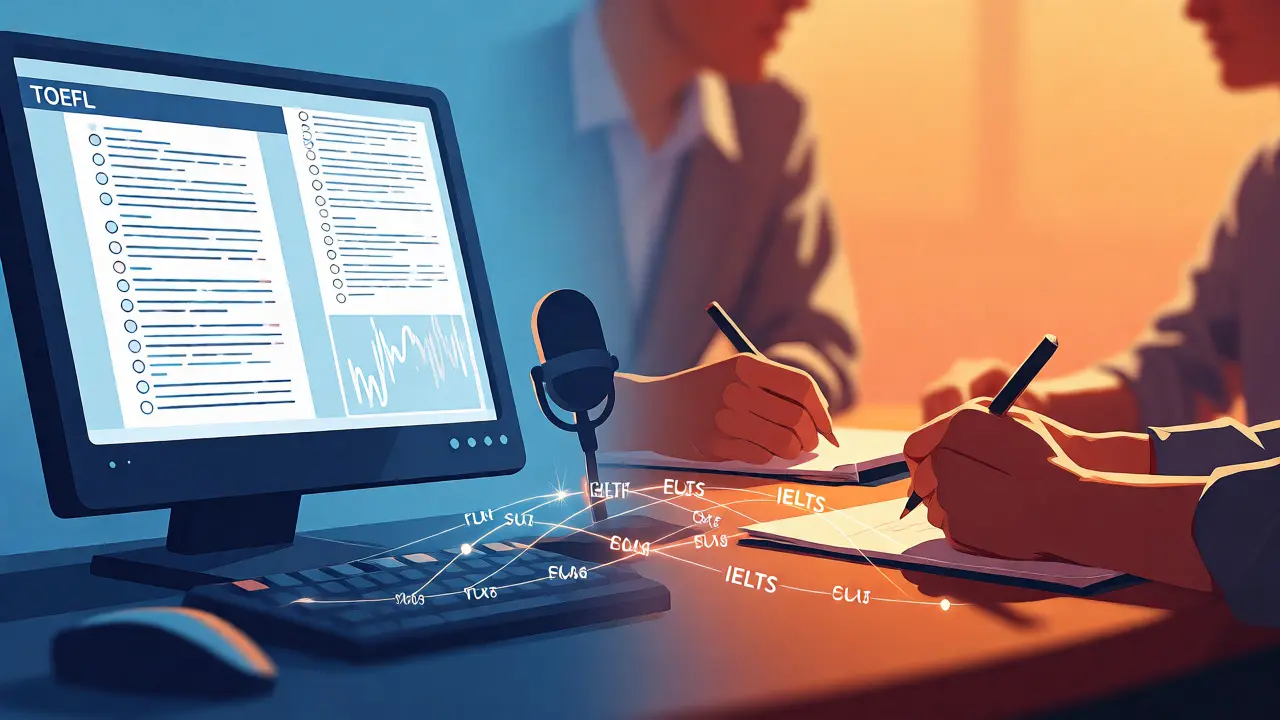
When you sign up for a structured course, whether online or in a classroom in Auckland, the curriculum usually splits into four distinct modules: Reading, Listening, Speaking, and Writing. While both TOEFL and IELTS cover these skills, the delivery differs significantly. Understanding this structure is half the battle.
In a typical 10-week intensive course, you won’t spend all day doing mock tests. Instead, the syllabus is designed to build foundational skills first, then apply them under test conditions. For example, early weeks focus on vocabulary acquisition-specifically academic word lists like the Academic Word List (AWL). Later weeks shift entirely to timing strategies and error correction. You aren’t just learning English; you are learning how to demonstrate your English within a rigid framework.
Reading and Listening: The Input Skills
The input sections-Reading and Listening-are where many candidates feel safe because they can pause and rewind (in practice) or read at their own pace. But in the actual exam, the clock is ticking. In TOEFL iBT, reading passages are long, dense, and academic. You might read about marine biology one minute and colonial history the next. The questions test your ability to infer meaning, identify main ideas, and synthesize information across paragraphs.
IELTS Academic reading is similar but uses shorter, more varied texts from journals, magazines, and books. The trick here isn’t speed-reading everything. It’s scanning. A good prep course will drill you on "skimming for gist" and "scanning for specifics." You learn to ignore the filler words and hunt for keywords. If you try to understand every single sentence, you will run out of time. Always.
Listening follows a similar pattern. In TOEFL, you listen to campus conversations and academic lectures. The catch? You hear it once. No second chances. In IELTS, you get multiple-choice, matching, and map-labeling tasks. The syllabus here focuses heavily on note-taking techniques. Can you capture the key points while still processing the audio? That’s the skill. Courses often use shadowing exercises-where you repeat audio immediately after hearing it-to improve your ear for nuance and intonation.
Speaking: The Performance Art
This is where nerves kick in. For TOEFL, you speak into a microphone. There is no human examiner to nod encouragingly. You hear a prompt, you have 15 seconds to prepare, and 45-60 seconds to speak. It feels robotic, and that’s by design. Your answer is recorded and graded later by humans and AI.
IELTS Speaking is different. It’s a face-to-face interview with a real person. This changes the dynamic completely. You can ask for clarification if you didn’t understand a question. You can use body language. However, you must be conversational yet formal enough to show range. Prep courses simulate this with role-plays. They teach you how to extend your answers without rambling. The golden rule? Don’t memorize scripts. Examiners spot rehearsed answers instantly and penalize them. Instead, learn structures. Learn how to compare, contrast, and hypothesize. Then plug in your own experiences.
| Feature | TOEFL iBT | IELTS Academic |
|---|---|---|
| Speaking Format | Recorded via microphone | Face-to-face interview |
| Question Types | Multiple choice, integrated tasks | Varied: fill-in-the-blank, matching, short answer |
| Scoring Scale | 0-120 points | Band Score 0-9 |
| Accent Focus | Predominantly North American | International mix (British, Australian, etc.) |

Writing: Structure Over Creativity
If you think writing an essay means being creative, you’re going to lose marks. In standardized testing, clarity beats creativity every time. The Integrated Task in TOEFL requires you to read a passage, listen to a lecture, and summarize the relationship between the two. It’s not about your opinion; it’s about accurate reporting.
The Independent Task asks for your opinion. Here, you need a clear thesis statement and three supporting paragraphs. Do not try to sound Shakespearean. Use simple, precise sentences. In IELTS, Task 1 involves describing a graph or chart. You need to highlight trends, make comparisons, and avoid personal opinions. Task 2 is an argumentative essay. The syllabus for writing focuses heavily on cohesion-using linking words like "however," "furthermore," and "consequently" correctly. Misuse of these connectors is a common trap that lowers your score faster than spelling errors.
How to Choose the Right Prep Course
Not all courses are created equal. Some are cash grabs that just hand you a PDF of old practice tests. Others offer genuine value. When evaluating options, look for these three things:
- Feedback Loops: Especially for Writing and Speaking. If a course doesn’t provide personalized feedback from a qualified tutor, it’s useless. You cannot correct your own grammatical blind spots.
- Adaptive Learning: Does the platform adjust difficulty based on your performance? Static courses waste time on concepts you already know.
- Mock Exam Frequency: Theory is fine, but stamina is built through practice. Look for courses that include full-length, timed simulations under realistic conditions.
Also, consider the format. Live classes offer accountability and peer interaction, which helps with speaking confidence. Self-paced online modules offer flexibility, crucial if you’re working full-time. Many students in New Zealand find hybrid models effective-self-study during the week, live workshops on weekends.
Proven Tips for Success
Beyond the syllabus, here are some tactical tips that experienced tutors swear by. First, immerse yourself in the target accent. If you’re taking TOEFL, watch US news. If IELTS, listen to BBC Radio 4 or ABC Australia. Your brain needs to tune into the rhythm and vowel sounds of the specific dialect.
Second, manage your energy, not just your time. These tests are marathons. Fatigue leads to careless errors. Practice taking breaks during study sessions to simulate the mental drain of the actual test day. Third, keep an error log. Every time you make a mistake in practice, write it down. Review this log weekly. Patterns emerge quickly. Maybe you consistently miss third-person singular verbs in speaking, or maybe you always misinterpret negative prefixes in reading. Target those weaknesses specifically.
Finally, don’t obsess over perfect scores unless your university demands it. Most institutions require a Band 7.0 in IELTS or a 90+ in TOEFL. Getting a 9.0 or 110 is nice, but diminishing returns set in hard. Focus on passing the threshold efficiently so you can move on to your actual goals.
Frequently Asked Questions
Which test is easier, TOEFL or IELTS?
There is no objectively "easier" test; it depends on your strengths. TOEFL is entirely computer-based and uses North American accents, which may suit those comfortable with typing and multiple-choice formats. IELTS includes a face-to-face speaking component and offers paper or computer options, often appealing to those who prefer interactive communication and British/Commonwealth accents. Analyze past practice tests to see which format aligns better with your natural abilities.
How long should I prepare for the exam?
Preparation time varies based on your current proficiency level. On average, moving up one band score (or 10 points on TOEFL) takes approximately 200 hours of guided study. For most intermediate learners, a dedicated prep period of 8 to 12 weeks is sufficient. Beginners aiming for advanced levels may need 4 to 6 months of consistent study.
Can I take the test online?
Yes, both tests offer home edition options. The TOEFL iBT Home Edition allows you to take the test from home with remote proctoring. IELTS also offers IELTS Online for the Academic module in many regions. However, check with your target university or immigration authority, as some institutions still prefer or require results from a physical test center.
Do prep courses guarantee a higher score?
No course guarantees a score, but they significantly increase your probability of success. Good courses provide strategy, structure, and feedback that self-study lacks. They help you avoid common pitfalls and optimize your time management. However, active engagement and consistent practice remain the primary drivers of improvement.
What is the validity period of my test scores?
Both TOEFL and IELTS scores are generally valid for two years from the test date. After this period, institutions and immigration bodies typically consider the results outdated, assuming your language proficiency may have changed. Plan your test date accordingly to ensure your scores are valid when you submit your applications.