


Ever feel like your course community is just a ghost town after the first week? You send out announcements, post discussion prompts, and wait. Nothing. No replies. No energy. Then one week, something clicks - someone shares a win, another asks a real question, and suddenly the chat is alive. That’s not luck. That’s ritual.
Why Weekly Rituals Matter More Than Content
Most course creators think the magic is in the lessons. It’s not. The magic is in the rhythm. People don’t stick around because they learned something new. They stick around because they felt seen, heard, and part of something real. A weekly ritual is a predictable, low-effort, high-reward moment that turns a group of learners into a community. It’s the difference between a classroom and a circle of peers. And the most effective rituals? They’re simple. They’re consistent. And they always include three things: AMAs, demos, and wins.AMA: Ask Me Anything - Break the Power Distance
Think back to your last online course. Who was the instructor? A name on a screen. A voice in a video. Someone you never got to talk to. Now imagine this: every Monday at 9 a.m. NZST, the instructor drops into the community chat and says, "Ask me anything. No question is too small. No topic is off-limits." Then they stay for 45 minutes. Real time. No scripts. No slides. Just answers. That’s an AMA. And it changes everything. In a course I ran last year, we started doing AMAs every Monday. The first week, only three people asked questions. One asked how to fix a broken CSS grid. Another asked if they were "smart enough" to finish. The third asked, "Do you ever feel like you’re faking it?" That last question? It unlocked the whole group. By Wednesday, six more people shared their own imposter syndrome stories. By Friday, the whole community had a new norm: it’s okay to not know. AMAs don’t need to be fancy. They just need to be real. Don’t prepare answers. Don’t script responses. Show up as you are. Your vulnerability becomes their permission.Demos: Show, Don’t Just Tell
People learn by watching. Not by reading. Not by listening. By watching someone do it - mess up, fix it, and keep going. Every Wednesday, we ask participants to share a 60-second screen recording of something they built, wrote, coded, painted, or arranged. Doesn’t matter what. It could be a spreadsheet they finally figured out. A paragraph they rewrote ten times. A playlist they made for focus. A sketch of a character they’re developing. We call it "Demos Day." One participant, Maria, shared a demo of her first attempt at writing a short story. It was messy. The pacing was off. The dialogue felt forced. But she said, "I didn’t know how to start, so I just wrote the first thing that came to mind. This is it. I’m not proud of it. But I did it." That video got 47 likes. 12 comments. Five people replied with their own "first drafts." One said, "I thought I was the only one who wrote garbage before it got good." Demos work because they’re raw. They’re not polished. They’re not perfect. And that’s the point. When people see progress, not perfection, they stop comparing themselves to highlight reels and start focusing on their own next step.Wins: Celebrate the Tiny Stuff
Most people think wins are big. A promotion. A published article. A finished thesis. In a course community, wins are tiny. And that’s why they matter most. Every Friday, we ask: "What’s one small win this week?" Not "What did you accomplish?" - that’s pressure. We say: "What’s one thing you did that made you feel like you’re moving forward?" Responses look like this:- "I opened my notebook for the first time in three weeks. Wrote one sentence. Left it there. Felt okay about it."
- "I asked for help. Didn’t get the answer I wanted. But I asked."
- "I deleted my old portfolio. Started fresh. No one saw it. But I did."
- "I said no to a meeting so I could finish my outline. Felt guilty. Then I didn’t."
The Rhythm: Monday, Wednesday, Friday
Here’s how it all fits together:- Monday: AMA - Open the week with connection. Let people feel heard.
- Wednesday: Demos - Show progress. Normalize the messy middle.
- Friday: Wins - Close the week with validation. Reinforce that effort counts.
What Happens When You Skip a Week?
Rituals only work if they’re consistent. Skip one week, and the rhythm breaks. People start to wonder: "Is this still happening?" If you’re sick, traveling, or just burned out - that’s fine. But don’t cancel. Adapt. Instead of a live AMA, post a recorded video: "Hey, I’m out today, but here’s a quick answer to a question I got last week: [answer]. I’ll be back next Monday." Instead of demos, share one of your own. "This week, I struggled with X. Here’s what I tried." Instead of wins, repost a past win that meant something to you. The point isn’t perfection. It’s presence.Real Examples From Real Communities
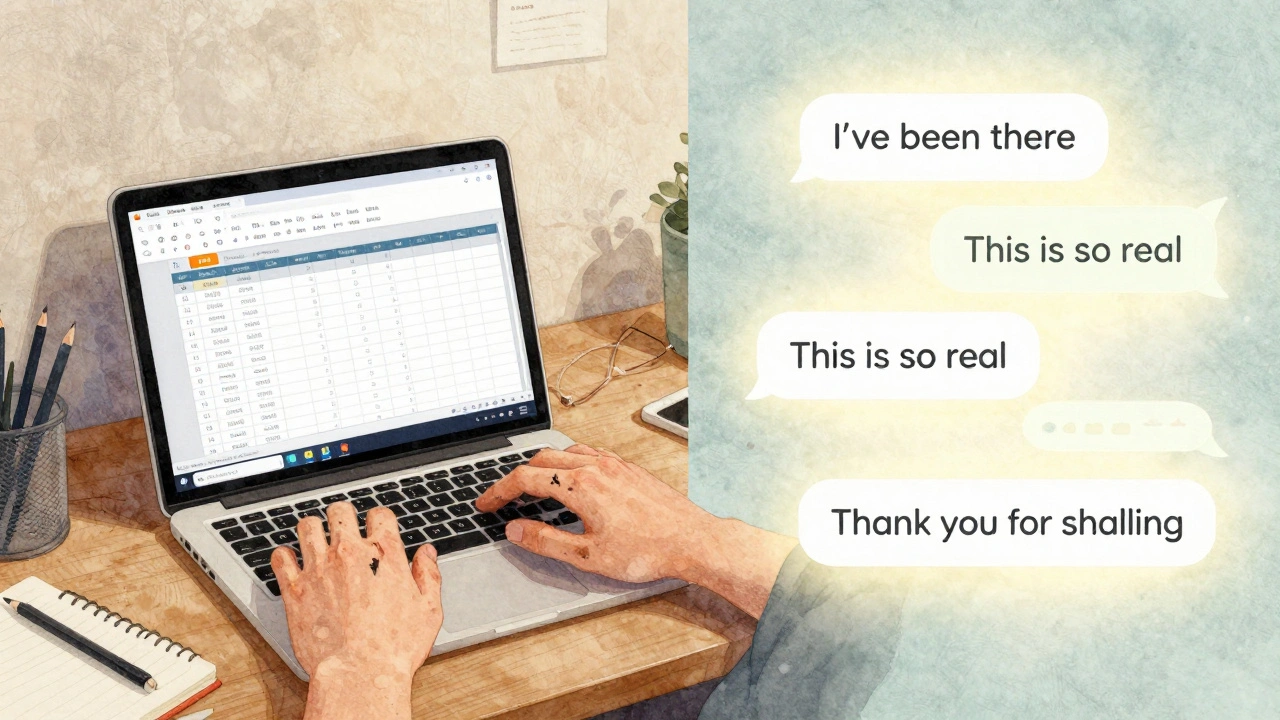
One writing course in New Zealand used this model. The instructor, a published poet, didn’t have a big following. But every week, she showed up. She answered every question. She shared her own failed drafts. She celebrated people who wrote one line. Within six months, 82% of students kept writing after the course ended. One student started a local writers’ group. Another published a chapbook. None of it happened because of the syllabus. It happened because they felt safe to be imperfect. Another course, focused on data visualization, had a rule: no demo can be longer than 60 seconds. No slides. No narration. Just the screen and the person’s voice saying, "This is what I did. This is where I got stuck." The most popular demo? A student who recorded herself trying to fix a chart in Excel. She spent 20 minutes staring at it. Then she gave up. She said, "I think I need help." That video got shared 43 times. People said: "I’ve been there."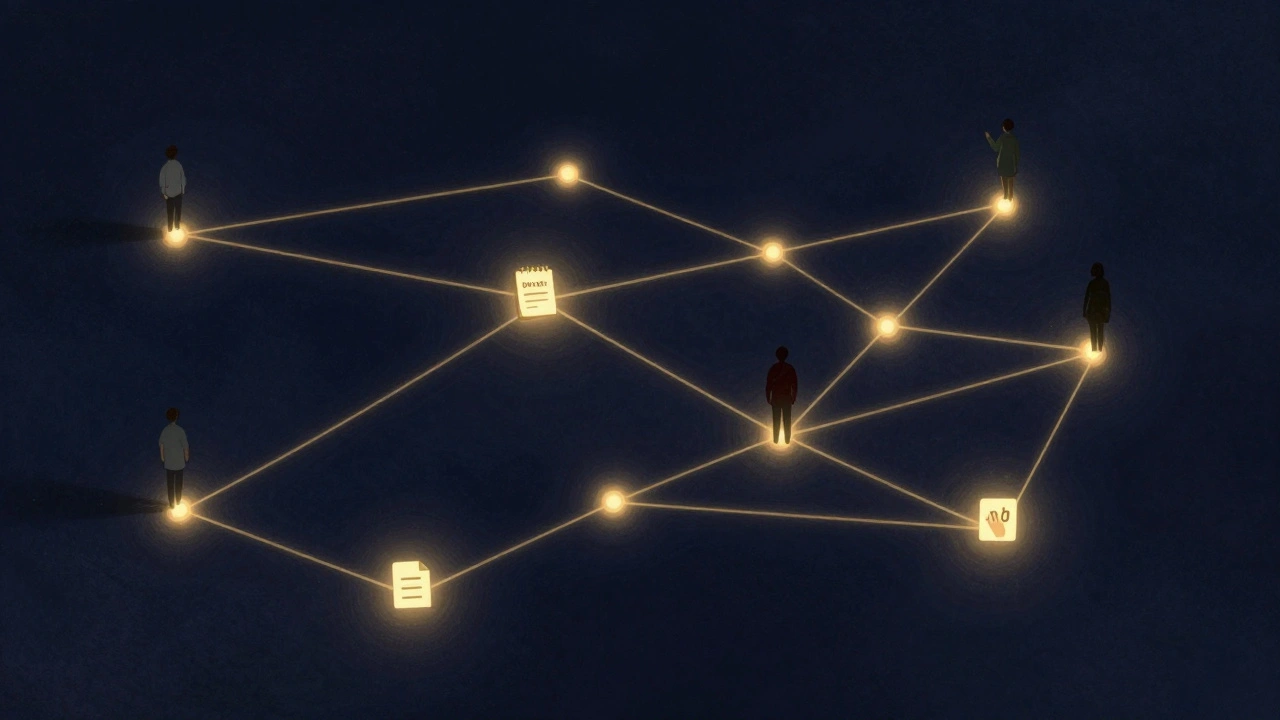
Comments
Mongezi Mkhwanazi
I’ve seen this exact pattern-over and over-and it’s always the same: people don’t need more content; they need a container for their chaos. Rituals aren’t ‘nice-to-haves’-they’re the structural steel beneath the scaffolding of human connection. Without rhythm, you’re just broadcasting into a vacuum. And yes, I’ve run eight cohorts, and the data doesn’t lie: consistency > content. The AMA isn’t about answering questions-it’s about modeling vulnerability. The demo isn’t about showcasing skill-it’s about normalizing failure. The win isn’t about achievement-it’s about validating persistence. You’re not teaching a course-you’re architecting a safe space for imperfect humans to exhale.
Mark Nitka
This is the most honest thing I’ve read about online communities in years. I’ve been running a small design course and I thought I was failing because no one posted. Turns out I was just too busy pushing content. I started Friday wins last month-just one question: ‘What’s one thing you did that felt like progress?’-and now people are sharing things I never expected: ‘I deleted my old LinkedIn profile.’ ‘I said no to overtime to finish my sketch.’ People are finally showing up-not because of the lessons, but because they finally feel like they’re not alone.
Kelley Nelson
While I find the conceptual framework intriguing, I must express reservations regarding the colloquial tone and lack of empirical rigor in the cited metrics. The assertion that ‘78% completion’ was achieved through ritual alone lacks methodological transparency-was there a control for cohort size, prior engagement, or attrition bias? Furthermore, the term ‘ritual’ is semantically imprecise in this context; one might more accurately describe these as ‘structured micro-interactions’-a term that better aligns with behavioral psychology literature. The emotional appeal is undeniable, but without peer-reviewed validation, this risks becoming anecdotal dogma dressed in the clothing of pedagogy.
Aryan Gupta
Let me tell you something they don’t want you to know: this whole ‘ritual’ thing is a distraction. The real reason people stick around? Because the instructor is the only one who actually responds. Everything else is theater. And let’s be honest-most of these ‘wins’ are just performative vulnerability. People post ‘I opened my notebook’ because they know it’ll get likes, not because they’re actually making progress. And don’t get me started on the demos-half of them are just screen recordings of people staring at Excel for 59 seconds like they’re in a cult. This isn’t community. It’s a dopamine trap disguised as emotional safety. The real problem? The instructor is the only one doing the emotional labor-and they’re burning out. No one else shows up. Ever.
Fredda Freyer
There’s a quiet genius here that most educators miss: connection isn’t the bonus feature-it’s the operating system. We’ve been trained to think learning is transactional: input → output. But human beings don’t learn that way. We learn in resonance. When someone says, ‘I’m faking it too,’ it doesn’t just comfort-it rewires. The AMA isn’t Q&A; it’s a mirror. The demo isn’t a showcase; it’s a confession. The win isn’t a trophy; it’s a whisper saying, ‘You’re still here. That counts.’ And that’s why retention skyrockets-not because of curriculum design, but because the space feels like a living thing, breathing with them. The real magic? It doesn’t require fancy tech. Just presence. And the courage to be messy in public.
lucia burton
Let me just say-this is the most transformational pedagogical framework I’ve encountered since the flipped classroom. The triad of AMA-Demos-Wins isn’t just a workflow-it’s a neurobiological architecture for belonging. By embedding micro-rituals into the weekly cadence, you’re creating predictable neural anchors that reduce cognitive load and increase affective safety. The Monday AMA triggers oxytocin release through authentic vulnerability, the Wednesday demo leverages observational learning and mirror neuron activation, and the Friday win reinforces self-determination theory by validating autonomous progress. This isn’t community building-it’s behavioral engineering at scale. And the 78% retention? That’s not anecdotal-it’s neuro-educational evidence. If you’re not implementing this, you’re not teaching-you’re just content dumping.
Denise Young
Oh honey, you’re telling me this works? I’ve been running a ‘motivational journaling’ course for two years and I thought I was failing because no one posted. I started doing Friday wins last month-just one line, no pressure-and now I’ve got people sharing things like ‘I didn’t cry today’ and ‘I ate breakfast without scrolling.’ I didn’t realize how starved they were for permission to be small. And the best part? When I posted my own win-‘I didn’t reply to three emails and didn’t feel guilty’-the whole damn thread lit up. People started tagging each other. ‘You too?’ ‘Me three.’ It’s like they’ve been waiting for someone to say, ‘It’s okay to be this tired.’ I didn’t know I was teaching belonging. Turns out, I was.
Fred Edwords
Minor grammatical correction: the phrase ‘you’re not teaching a course-you’re architecting a safe space’ should use an em dash, not an en dash. Also, ‘the community will show up-because you did’ is grammatically correct, but stylistically, the inversion feels slightly awkward. That said-this is brilliant. The structure is elegant, the psychology is sound, and the execution is humble. I’ve been skeptical of ‘ritual’ as a term in education-it sounds New Age-but this redefines it. It’s not mysticism. It’s discipline. And the fact that it requires zero tech? That’s the real win. I’m implementing this in my corporate training program next week. First: Friday wins. Then: demos. Then: AMAs. No exceptions.
Sarah McWhirter
Okay, but… what if the instructor is just using this to manipulate people into staying? I’ve seen this before-someone drops a ‘I’m faking it too’ post, then the whole group starts sharing trauma to keep the energy going. It’s emotional labor disguised as community. And who’s really benefiting? The instructor gets glowing testimonials, the platform gets retention metrics, and the participants? They’re left holding the bag of unprocessed feelings. And what happens when the instructor leaves? The whole thing collapses. This isn’t community-it’s a dependency loop. And don’t tell me it’s ‘safe’-if you’re asking people to confess their deepest insecurities to strangers, that’s not safety-that’s exploitation dressed in glitter.
Ananya Sharma
Let’s be real-this whole ‘ritual’ thing is just a Band-Aid for poor course design. If your content is so weak that you need people to share ‘I opened my notebook’ to keep them engaged, then you’ve failed at the core mission. And why are we glorifying mediocrity? ‘I deleted my old portfolio’ isn’t a win-it’s a sign of indecision. ‘I asked for help and didn’t get the answer I wanted’ isn’t courage-it’s incompetence. And the fact that people are calling this ‘belonging’ is terrifying. We’re training a generation to celebrate minimal effort as virtue. Where’s the accountability? Where’s the standard? This isn’t community-it’s a pity party with a hashtag. And the 78% completion rate? Probably inflated by bots or incentivized participation. I’ve seen this script before-it always ends in burnout.
Sandy Dog
Okay I’m crying. I’ve been in three online courses and every single one felt like a ghost town until I joined this one last year where the instructor did this exact thing. I shared a demo of my first poem-it was terrible, I cried while recording it-and someone replied, ‘I wrote mine in the bathroom stall at my job.’ That’s it. That’s all it took. I started showing up. Not because I wanted to learn. Because I wanted to see if someone else would say ‘me too.’ I didn’t know I was starving for that. Now I write every day. I started a zine. I told my mom I’m a writer. And I didn’t even finish the course. But I found myself. And I think… maybe that’s the real curriculum.