


You probably remember the scramble of 2020. We all suddenly became remote workers, and workplace learning was shoved onto a Zoom call that nobody wanted to attend for eight hours straight. Fast forward to today, September 2026, and the dust has settled. But if you think things have gone back to normal, you are missing the bigger picture. The way we learn at work hasn't just returned; it has mutated. If you are leading teams or building careers in Auckland or anywhere else globally, the next three years will look radically different from what you experienced last year.
The Shift From Static Courses to Dynamic Skills
Here is the hard truth: static course catalogs are dying. For decades, companies bought off-the-shelf training modules that felt like watching paint dry. You took a quiz, got a certificate, and forgot everything by lunch. That model is breaking because the half-life of professional skills is shrinking. In tech, it is already under two years. In other sectors, it is not far behind. By 2027, expect most organizations to abandon rigid annual curricula in favor of dynamic skill mapping.
This isn't just buzzword soup. It means your company will likely use software that scans your project outputs, communication patterns, and completed tasks to identify gaps in real-time. Instead of assigning you a generic "Leadership 101" course, the system might notice you struggled with conflict resolution during a recent sprint review and suggest a specific five-minute video or a peer mentorship session. This approach treats learning as a continuous feedback loop rather than a periodic event.
| Feature | Traditional Model (Pre-2025) | Emerging Model (2026-2029) |
|---|---|---|
| Structure | Fixed courses, set schedules | Modular, on-demand micro-learning |
| Delivery | LMS portals, classroom sessions | In-flow tools (Slack, Teams, Jira integrations) |
| Assessment | Quizzes, completion rates | Skill proficiency metrics, applied performance data |
| Personalization | Role-based generalizations | AI-driven individual pathways |
AI Becomes Your Personal Tutor
We have talked about Artificial Intelligence for years, but now it is actually doing the heavy lifting. By 2028, generative AI won't just summarize articles for you; it will create custom learning content on the fly. Imagine asking an internal bot, "How do I handle this specific client objection using our new compliance guidelines?" The AI doesn't just link to a PDF; it generates a role-play scenario tailored to your industry and your specific job function.
This shifts the burden of content creation from human instructional designers to AI-assisted workflows. Human experts still validate the facts, but the tedious work of formatting, translating, and updating materials happens automatically. For employees, this means less time searching for the right resource and more time applying it. However, it also demands digital literacy. You need to know how to prompt effectively to get useful answers, which is becoming a core workplace competency alongside coding or writing.
The Rise of Social and Peer-Led Learning
While AI handles the facts, humans handle the nuance. One of the strongest trends emerging is the formalization of social learning. Companies are realizing that 70% of learning happens through interaction with others, yet most budgets go toward formal courses. To fix this imbalance, organizations are building platforms where knowledge sharing is incentivized. Think of it as an internal LinkedIn where solving a colleague's problem earns you recognition points or badges.
This trend addresses the isolation many remote workers feel. When you can tap into a global network of peers within your company to solve a niche problem, you build connections that matter. In New Zealand, where collaboration often drives innovation, this fits naturally with our cultural preference for flat hierarchies. Expect to see more "communities of practice" where people with similar roles meet virtually not to listen to a lecture, but to swap war stories and solutions. These interactions are often recorded and indexed, turning tacit knowledge into searchable assets.

Microlearning Gets Serious
Attention spans aren't what they used to be, and frankly, neither is our patience for irrelevant information. Microlearning-delivering content in small, focused bursts-is evolving beyond simple trivia cards. The next iteration involves contextual nudges. Instead of pushing a notification saying "Time for your safety module," your workflow tool might pause your task and ask, "Did you check the lockout/tagout procedure before starting this machine?"
- Just-in-Time: Information delivered exactly when needed, not weeks before.
- Bite-Sized: Content consumed in under 3 minutes to fit between meetings.
- Action-Oriented: Focuses on immediate application rather than theoretical understanding.
This approach reduces cognitive load. You aren't trying to memorize a whole manual; you are accessing the one page you need right now. For managers, this changes how you measure success. You stop tracking "hours spent in training" and start tracking "time to proficiency." If an employee can apply a new skill immediately after a two-minute tutorial, that is worth ten times more than a day-long workshop they forget by Friday.
Skills-Based Hiring and Promotion
The degree is losing its power as a gatekeeper. By 2029, more companies will hire and promote based on verified skills rather than university credentials. This shift is driven by the skills gap. Employers can't find people with the exact technical abilities they need, so they look for evidence of capability instead of paper qualifications. Platforms like Credly or blockchain-based credentialing systems allow workers to showcase verifiable achievements from bootcamps, online courses, or even successful projects.
This democratizes career paths. A person without a computer science degree who has consistently demonstrated strong Python skills through GitHub contributions or certified assessments can compete directly with traditional graduates. For HR departments, this requires a complete overhaul of recruitment processes. Job descriptions become lists of required competencies rather than lists of degrees. It forces everyone to take ownership of their own learning journey because your portfolio matters more than your transcript.
Wellbeing Integrated into Learning
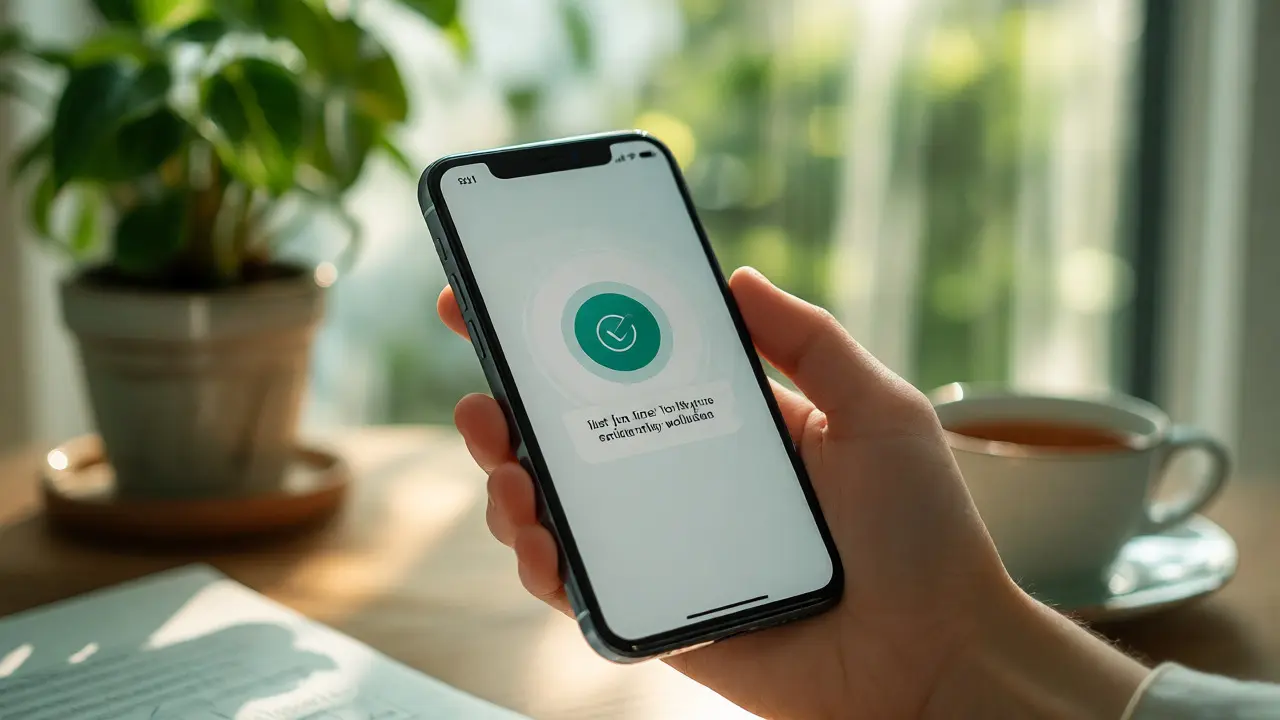
Finally, there is a growing recognition that you cannot learn effectively if you are burned out. Workplace learning is merging with wellbeing initiatives. Mental health awareness, stress management, and resilience training are no longer optional add-ons; they are foundational to productivity. Tools that track workload intensity may suggest breaks or mindfulness exercises directly within the learning platform.
This holistic view acknowledges that cognitive capacity is limited. Pushing too much information too fast leads to retention failure. Smart systems now pace learning based on user engagement and reported stress levels. If you are overloaded, the system might delay non-essential modules until your calendar clears up. It sounds futuristic, but early adopters report higher completion rates and better employee satisfaction when learning respects human limits.
Frequently Asked Questions
Will AI replace human trainers?
No, AI will augment them. While AI excels at delivering factual content and personalized recommendations, human trainers are essential for soft skills development, complex problem-solving workshops, and providing emotional support. The role of the trainer shifts from "sage on the stage" to "guide on the side," focusing on facilitation and coaching rather than lecturing.
Is microlearning effective for complex topics?
Microlearning works best for procedural knowledge and quick reference. For complex conceptual frameworks, it needs to be part of a larger strategy that includes deeper dives, discussions, and practical application. Using microlearning exclusively for complex subjects can lead to fragmented understanding without context.
How do companies measure ROI on these new learning methods?
Companies are moving away from vanity metrics like completion rates. They now focus on business impact metrics such as reduced error rates, faster onboarding times, increased sales conversion, and employee retention. Advanced analytics correlate learning activities with performance outcomes to prove value.
Do I need to buy expensive VR headsets for workplace learning?
Not necessarily. While Virtual Reality (VR) is great for high-risk simulation training (like surgery or machinery operation), most everyday learning can happen via mobile devices or desktop browsers. Augmented Reality (AR) overlays on smartphones are often more accessible and practical for field workers and retail staff.
What is the biggest barrier to adopting these trends?
Cultural resistance and lack of leadership buy-in. Employees need time to learn, and managers must prioritize development over immediate output. Without a culture that values continuous improvement and allows space for experimentation, even the best technology will fail to drive meaningful change.
Comments
SHANNON GRUBER
Static courses are dead, obviously. If you're still buying off-the-shelf modules in 2026, you're wasting money and everyone knows it.
Howard Hurd
Finally someone says it. We don't need some AI telling us how to work when American grit is what built this economy 🇺🇸. Keep your bots out of my training schedule!
Manoj Kumar
The assertion that 'static course catalogs are dying' is a carefully constructed narrative designed to obscure the fact that corporate entities are merely seeking new avenues for surveillance capitalism. By scanning project outputs and communication patterns, organizations are not identifying gaps; they are quantifying human behavior to justify wage stagnation under the guise of 'dynamic skill mapping.' This shift from assessment to proficiency metrics allows management to discard traditional tenure-based security without legal repercussion. It is imperative to recognize that the 'half-life of skills' argument is a manufactured crisis to drive consumption of micro-credentials. One must remain skeptical of the claim that AI generates content on the fly; rather, it recycles existing data points to create an illusion of personalization while stripping away the nuance of human mentorship. The integration of wellbeing into learning platforms further serves to monitor employee stress levels, effectively turning mental health into a metric for productivity optimization rather than genuine care. This paradigm shift benefits shareholders more than workers, as it fragments labor into manageable, replaceable units of skill rather than holistic professionals. We are witnessing the industrialization of cognition, where every keystroke is analyzed for value extraction. The promise of democratized career paths via blockchain credentials is likely a distraction from the erosion of collective bargaining power. Employees are being trained to view themselves as portfolios of assets rather than members of a workforce. This individualization of responsibility masks systemic failures in training infrastructure. The 'social learning' trend is simply unpaid peer-to-peer support disguised as innovation. Ultimately, these trends represent a consolidation of control over the intellectual capital of the workforce, ensuring that knowledge remains proprietary and controlled by those who own the platforms. Vigilance is required to prevent the complete commodification of professional development.
Darlene Hopkins
This feels really supportive of remote teams.
I love the idea of communities of practice helping with isolation.
Bryce Imbriale
Yes! Time to ditch the boring lectures and start applying stuff immediately!!
Microlearning is the key to staying sharp
Let's go team!!
william mcstay
Foreign ideas creeping in again. We had good training before all this tech nonsense.
Charles Reah
Hello everyone,
Thank you for sharing such a comprehensive overview of the upcoming trends. As we look toward 2029, it is crucial that we approach these changes with both excitement and caution. The move towards skills-based hiring is particularly promising for inclusivity, allowing individuals from diverse backgrounds to demonstrate their capabilities without the barrier of traditional degrees. However, we must ensure that the implementation of AI-driven pathways does not inadvertently introduce bias into our recruitment processes. I encourage all leaders to prioritize transparency when adopting these new tools. Let us foster environments where continuous learning is celebrated, not just monitored. Thank you.
Prayagraj Medicose
Bro, they just want to track everything we do 😳. My boss already uses Slack integrations to see if I'm actually working or just thinking. It's creepy but yeah, the old way sucked anyway lol.
Brad Walker
We are drowning in information but starving for wisdom. The article speaks of efficiency, but at what cost to the soul? When every moment is optimized for 'skill acquisition,' do we lose the space for contemplation? Perhaps the true learning happens in the silence between the notifications, not in the notification itself. We risk becoming hollow vessels filled with data, devoid of the profound depth that comes from unstructured time. The machine learns faster, yes, but does it understand? Or does it merely mimic? This is the tragedy of our age: speed replacing substance. We must ask ourselves if we are building careers or merely processing tasks. The void grows larger with every click.
Hemali Jaiswal
What a vibrant tapestry of change! 🌈 It is truly heartening to see the emphasis on human connection through social learning. In my experience, the most colorful insights come from sharing stories with peers, not from sterile algorithms. I believe that by weaving together technology and empathy, we can create a workplace that nurtures both the mind and the spirit. Let us embrace this evolution with open hearts and curious minds, ensuring that no one is left behind in the digital shuffle. Together, we can paint a brighter future for learners everywhere! ✨
Sean Eagen
Degrees are useless now. Just show me what you can do. Stop wasting time on paper.
Kieran Mitchell
Oh, please!!! Don't get me started on the 'AI Tutor' hype!!! It is nothing more than a fancy autocomplete with delusions of grandeur!!! We are handing over our cognitive autonomy to servers owned by tech giants who care about profit, NOT your personal growth!!! And don't even get me started on 'wellbeing integrated into learning'!!! That is just corporate gaslighting to make you feel guilty for being tired!!! They want you to be efficient, not happy!!! There is a massive conspiracy here to turn employees into robots who think they are humans!!! Wake up!!! The system is rigged against critical thinking!!! Every 'micro-nudge' is a leash!!! We are being trained to obey, not to learn!!! It is terrifying, truly!!! But nobody listens because they are too busy checking their badges!!! 🤡🤡🤡
LoriBeth Blair
You people are missing the point. It's simple. If you can't use the tool, you're obsolete. Adapt or die. That's how it works. Always has been.