


You spend weeks building a high-quality online course. You record the videos, write the workbooks, and set up the payment gateway. Then you hit publish. Silence. Or worse, a few views from friends who are too polite to tell you it’s boring. The gap between having great content and actually making money from it is huge. Most creators fail not because their course is bad, but because their promotion strategy relies on hope rather than data.
YouTube is no longer just a video hosting site; it is the second largest search engine in the world and the primary discovery platform for educational content. If you want to sell an online course in 2026, you cannot ignore YouTube. But simply uploading lecture clips isn't enough. You need a cohesive system that turns casual viewers into paying students while simultaneously leveraging YouTube's own monetization features to build a safety net. This guide breaks down exactly how to bridge that gap.
The Shift from Views to Value
In the early days of the creator economy, the goal was vanity metrics: millions of subscribers, viral hits, and ad revenue. That model is broken for educators. AdSense revenue fluctuates wildly based on advertiser demand and CPM (cost per mille) rates, which often drop during economic uncertainty. For someone selling a $500 or $1,000 course, relying on ad revenue is like trying to fill a swimming pool with an eyedropper.
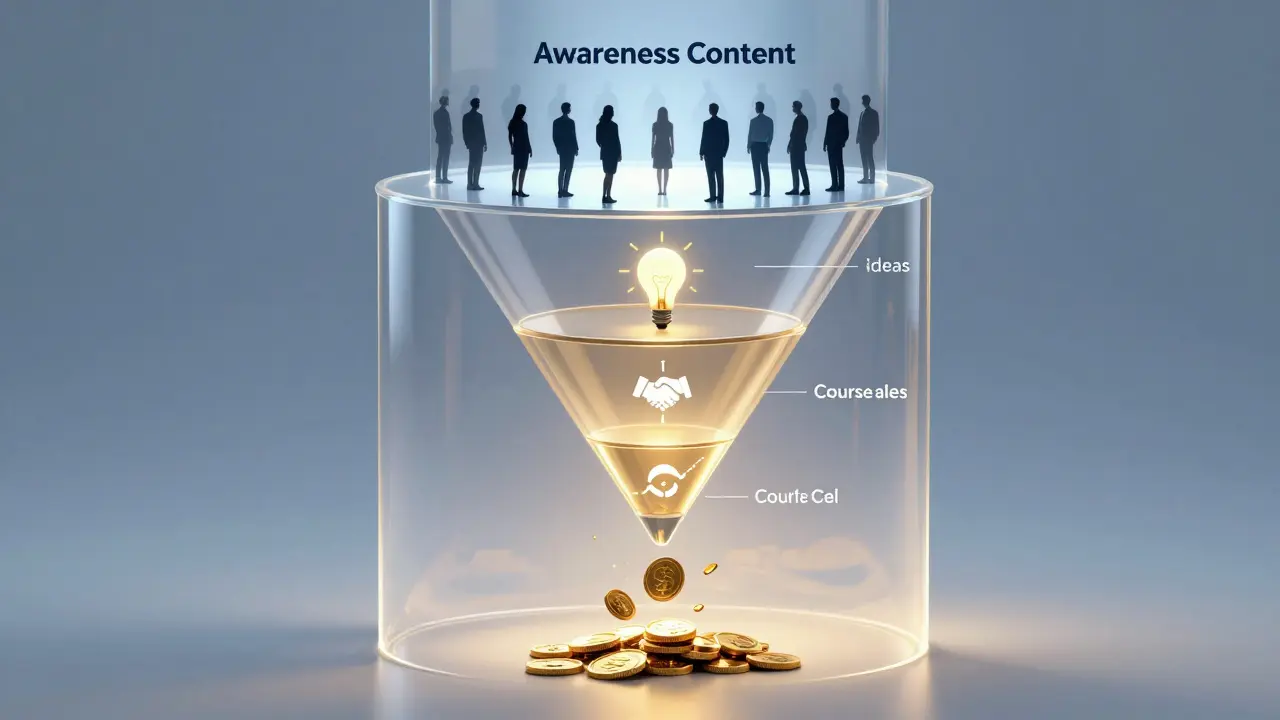
The modern strategy flips this script. Your YouTube channel is your top-of-funnel marketing engine. Every view is a potential lead. The metric that matters now is conversion rate, not just watch time. When you create content, you are not entertaining; you are demonstrating expertise. You are proving that you can solve a specific problem better than anyone else. This builds trust. Trust sells courses. Without trust, even the best sales page will fail.
Structuring Content for Conversion
To turn viewers into students, your content must follow a logical progression. Random vlogs about your day might build a personal brand, but they rarely sell specialized knowledge. You need a content ladder.
- Awareness Content: These are broad topics that attract new audiences. Think "How to start coding" or "Basics of personal finance." The goal here is volume and reach. Use SEO-friendly titles and keywords to capture people searching for answers.
- Consideration Content: Once they know you, show them depth. Create case studies, behind-the-scenes looks at your methodology, or deep dives into specific pain points. This proves you have the solution.
- Decision Content: This is where you explicitly talk about your course. Show testimonials, break down the curriculum, and explain the transformation your students achieve. Make the offer clear.
If you only post awareness content, you’ll have views but no sales. If you only post decision content, you’ll have no one to sell to. Balance is key. A good rule of thumb is the 80/20 rule: 80% value-driven educational content, 20% direct promotion.
Leveraging YouTube Shorts for Discovery
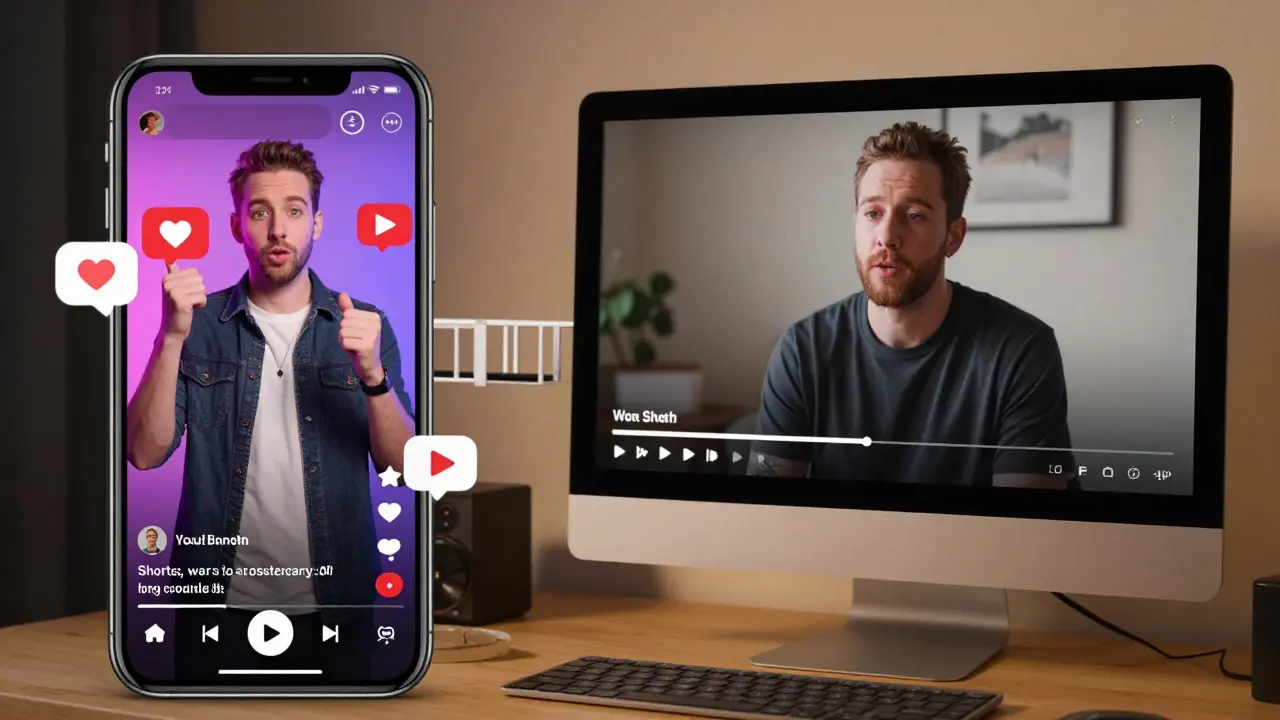
In 2026, YouTube Shorts is a short-form vertical video feature on YouTube that competes directly with TikTok and Instagram Reels. It is arguably the most powerful tool for rapid audience growth right now. The algorithm pushes Shorts to non-subscribers aggressively, giving you exposure to thousands of people who don’t know you yet.
However, Shorts viewers have different expectations than long-form viewers. They want quick hits of value. Use Shorts to highlight one specific tip from your course. For example, if you teach photography, show a 15-second clip on "How to fix blurry photos in Lightroom." At the end, add a text overlay: "Full tutorial in my course (link in bio)."
The critical link here is the connection between Shorts and your long-form content. YouTube allows you to link a Short to a related long-form video. Use this feature. Let the Short hook them, and let the long-form video build the trust needed to sell the course. Never try to close a sale directly in a Short. It feels spammy and disrupts the user experience.
Optimizing for Search and Suggested Feeds
Your content needs to be found. YouTube SEO works differently than Google SEO. On Google, you rank for keywords. On YouTube, you rank for clicks and retention. The title and thumbnail get the click; the first 30 seconds keep the viewer watching.
Start with keyword research. Use tools like TubeBuddy or VidIQ to find what your ideal student is typing into the search bar. Are they looking for "Python for beginners" or "Advanced Python automation"? Match your video title to their intent. But don't stop there. Your thumbnail must complement the title, not repeat it. If the title says "How to Fix X," the thumbnail should show the result of fixing X, or a dramatic before-and-after comparison.
Retention is king. If people click away after 10 seconds, YouTube stops promoting your video. Start your videos with a hook. State the problem immediately. Tell them exactly what they will learn. Avoid long intros with logos and music. Get straight to the value. If you can keep people watching past the midpoint, YouTube will push your video to the "Suggested" column next to other popular videos in your niche. This is where exponential growth happens.
The Funnel: From Viewer to Student
Having traffic is useless if you don't capture it. Relying solely on the link in your video description is risky because users often forget to go back and check it. You need a more aggressive lead capture strategy.
Create a lead magnet. This could be a free mini-course, a checklist, or a template related to your main paid course. Offer this freebie in exchange for their email address. In your video, say: "I’ve created a free PDF guide that covers these three steps in detail. Grab it via the link in the pinned comment."
Why the pinned comment? Because it’s visible without clicking "more" on mobile devices. Once you have their email, you can nurture them. Send automated emails that provide additional value and gently introduce your paid course. Email marketing has a much higher ROI than social media ads because you own the list. Social platforms can change algorithms overnight; your email list stays yours.
| Source | Cost | Speed | Sustainability | Best For |
|---|---|---|---|---|
| YouTube Organic | Time-intensive | Slow (months) | High | Building authority and long-term sales |
| Paid Ads (YouTube/FB) | Money-intensive | Fast (days) | Low (stops when budget stops) | Testing offers and scaling quickly |
| Email Marketing | Low | Medium | Very High | Closing sales and repeat customers |
| Shorts/Viral Content | Time-intensive | Unpredictable | Medium | Top-of-funnel awareness |
Monetizing Beyond the Course
While your primary goal is selling courses, don't ignore YouTube's native monetization. YouTube Partner Program (YPP) is a program that allows eligible creators to earn money through ads, Super Chats, and channel memberships. To join, you need 1,000 subscribers and either 4,000 public watch hours in the last 12 months or 10 million Shorts views in 90 days.
Ad revenue won't make you rich initially, but it validates your audience. If YouTube pays you for ads, it means advertisers trust your content. This confidence can help when you pitch sponsorships. Brands pay for access to your audience. If you have a loyal following interested in productivity, companies selling project management software will pay you to mention their product.
Combine these streams. Use ad revenue to cover your hosting costs. Use sponsorships to fund better equipment. Use course sales to generate profit. Diversification protects you. If YouTube changes its algorithm tomorrow, your email list and course platform still exist.
Common Pitfalls to Avoid
Many creators sabotage their own success by falling into common traps. First, inconsistency. Posting once a month doesn't signal to the algorithm that you're active. Aim for at least one long-form video and two Shorts per week. Consistency builds habit among your viewers.
Second, ignoring analytics. YouTube Studio provides detailed data. Look at "Click-Through Rate" (CTR) and "Average View Duration." If CTR is low, your thumbnail or title is weak. If duration is low, your content isn't engaging. Fix the leaky bucket before adding more water.
Third, being too salesy too soon. People buy from those they like and trust. Spend the first few months giving away all your secrets. Yes, really. If you give away 80% of your knowledge for free, people will pay for the structured path, community, and accountability you provide in the course. They aren't buying information; they're buying transformation.
Scaling Your Strategy
Once you have a working funnel, scale it. Repurpose your long-form videos into blog posts, podcast episodes, and LinkedIn articles. Take your best-performing Shorts and stitch them together into a longer compilation. Use AI tools to transcribe your videos and extract key quotes for social media graphics.
Collaborate with other creators in your niche. Do a joint live stream or interview each other. This exposes you to a new, trusted audience. If you teach graphic design, collaborate with a web developer. Their audience needs designers; your audience needs developers. It’s a win-win.
Finally, listen to your audience. Ask them what they struggle with. Use comments and community polls to decide your next video topic. This ensures you’re creating content that solves real problems, which naturally leads to course sales. The best marketing is helpfulness.
How many subscribers do I need to start selling an online course?
You don't need a large subscriber count to start selling. You need a targeted audience. A channel with 1,000 highly engaged subscribers interested in "advanced Excel formulas" will sell more courses than a channel with 100,000 subscribers watching random comedy clips. Focus on niche relevance over raw numbers. Many successful course creators launched with fewer than 500 subscribers by leveraging email lists and specific problem-solving content.
Can I promote my course directly in YouTube video descriptions?
Yes, but it's not the most effective method alone. While you should always include a link in the description, many viewers never scroll down. It's better to use a verbal call-to-action (CTA) in the video itself and point to the pinned comment or the first link in the description. Using a landing page that captures emails before redirecting to the course sales page increases conversions significantly compared to sending traffic directly to a checkout page.
What is the best type of content for driving course sales?
The best content demonstrates your unique methodology and solves immediate pain points. Case studies showing student results are incredibly powerful because they provide social proof. Tutorial-style videos that leave the viewer wanting more are also effective. For example, teach them how to identify a problem, but save the step-by-step implementation for the course. This creates a "knowledge gap" that your course fills.
How does YouTube SEO differ from Google SEO?
Google SEO focuses heavily on backlinks and domain authority. YouTube SEO prioritizes user engagement metrics: Click-Through Rate (CTR), Watch Time, and Retention. Keywords in titles and tags help YouTube understand your content, but if people don't click or watch, the video won't rank. Therefore, optimizing thumbnails and hooks is just as important as keyword research on YouTube.
Is it worth using YouTube Shorts if my course is complex?
Absolutely. Shorts are excellent for top-of-funnel awareness. You don't need to explain the entire complex course in 60 seconds. Instead, use Shorts to debunk myths, share quick tips, or show surprising facts related to your niche. The goal is to get noticed. Once a viewer is interested, you can link the Short to a long-form video that explains the complexity and directs them to your course.
Comments
Oskar Falkenberg
hey there mate, i just wanted to drop a quick note to say that this guide is absolutely brilliant and really hits the nail on the head when it comes to the struggle we all face with monetization because i have been trying to get my course off the ground for months now and every time i look at my analytics it feels like im shouting into the void but reading about the content ladder concept has given me a new perspective on how to structure my videos so that they actually lead somewhere meaningful rather than just being random thoughts i had while recording. i think many of us forget that trust is the currency here and not just views or likes which is why i am going to start focusing more on those consideration pieces where i can show the depth of my knowledge without giving everything away immediately. it is quite reassuring to know that others are thinking along these lines too and that there is a community here willing to share insights instead of gatekeeping information which is something i value highly in this digital age where collaboration seems to be fading away in favor of competition. thanks for putting this together because it has genuinely helped clarify some of the murky areas i was struggling with regarding seo and retention metrics.
Caitlin Donehue
i noticed that the section on youtube shorts mentions linking them to long form content but i wonder if that feature is still as prominent as it used to be since the algorithm seems to change every few weeks and sometimes the linked video option disappears from the interface entirely which makes me curious about whether there are alternative methods creators are using to bridge that gap effectively without relying solely on the platform's built in tools.
Stephanie Frank
honestly this entire post reads like a sales pitch for someone who wants to sell you a course on how to sell courses which is ironic considering the advice given about not being too salesy too soon because the author clearly doesn't understand that most people here are already drowning in generic marketing advice that tells them to build an email list and use a funnel when in reality the market is saturated with low quality content that nobody cares about anymore so telling us to create more content is just adding to the noise pollution rather than solving the actual problem of discoverability in a crowded space where only the lucky few break through regardless of their strategy.
Patrick Dorion
the distinction between awareness consideration and decision content is crucial because it mirrors the philosophical journey of learning where one must first become aware of a problem before they can consider solutions and finally decide on a path forward which is why i always tell my students that education is not just about information transfer but about guiding the mind through these stages deliberately rather than leaving it to chance. when you treat your channel as a place for genuine inquiry rather than a billboard you naturally attract people who are ready to engage deeply with your material which leads to higher conversion rates organically without needing aggressive tactics. it is interesting to see how the mechanics of attention align with the ethics of teaching because both require respect for the audience's time and intelligence.
Marissa Haque
oh my goodness!!! i cannot believe how much sense this makes!! i have been posting random clips for months and wondering why nobody buys anything! this content ladder idea is literally life changing!!! i feel so stupid for not realizing earlier that i need to show value first before asking for money!!! thank you so much for explaining this in such a clear way!!! i am going to rewrite all my video descriptions right now!!!
Keith Barker
the essence of the matter lies not in the quantity of views but in the quality of connection forged between creator and viewer which suggests that the pursuit of viral fame is a hollow endeavor compared to the steady accumulation of trust through consistent and meaningful engagement over time.
Lisa Puster
this is typical american style marketing nonsense pushing the idea that everyone needs to be an entrepreneur and sell something online which ignores the fact that most people would rather just learn for the sake of learning without being funneled into a sales process designed to extract their data and money from them its insulting to suggest that education should be commodified in such a transactional manner especially when real expertise requires years of dedicated study not just watching a few youtube videos and buying a course from some self appointed guru who probably learned everything from another guru.
Joe Walters
look i tried following all this advice for like two years and honestly it felt like i was working a second job just to keep up with the algorithm changes and by the time i finally got some traction the rules changed again so dont take this guide as gospel truth because the game is rigged against small creators anyway and unless you have a team of editors and marketers behind you you are just burning out for nothing which is exactly what happened to me and now i just post whatever i want whenever i feel like it and ignore the metrics because they are meaningless stressors that ruin your mental health.
Robert Barakat
one might ponder whether the true value of a course lies in the structured path it offers or merely in the validation of having paid for knowledge which raises questions about the nature of commitment in digital learning environments where distractions are abundant and focus is scarce.