

When we talk about an accessibility statement, a clear public commitment to making digital content usable by people with disabilities. Also known as accessibility policy, it’s not just a legal checkbox—it’s the foundation of fair, human-centered learning. If your course doesn’t work for someone using a screen reader, a keyboard, or a magnifier, it’s not really a course. It’s a barrier. And too many online learning platforms still treat accessibility as an afterthought—something to fix only if someone complains. But the truth is, accessibility isn’t about helping a small group. It’s about designing for the full range of human ability. When you make a course easier for someone with low vision, you also make it easier for someone scrolling on a phone in bright sunlight. When you add captions, you help not just the deaf, but also the person learning in a noisy cafe or trying to absorb content while babysitting.
A strong accessibility statement doesn’t just say "we care." It shows how. It names the standards it follows—like WCAG 2.1—and explains what tools and features are built in: keyboard navigation, alt text for images, transcripts for audio, resizable text, color contrast that actually works. It tells you who to contact when something breaks. And it’s updated regularly, because accessibility isn’t a one-time project. It’s a practice. Look at the posts here: online courses, digital learning experiences delivered over the internet are built on platforms that often ignore these needs. But some are changing. inclusive design, a method of creating products and environments usable by all people, to the greatest extent possible isn’t a trend. It’s the only way to build learning that lasts. And when you design with learners with disabilities, students who face physical, sensory, cognitive, or neurological barriers to accessing content in mind, you don’t just comply—you innovate. You create simpler interfaces, clearer instructions, and more flexible ways to engage. Those improvements help everyone.
You’ll find real examples here: how to test a course with actual users who rely on assistive tech, how to write alt text that doesn’t just describe but adds meaning, how to fix a video player that locks out keyboard users. These aren’t theoretical ideas. They’re fixes that teams have tested, failed at, and improved. You’ll also see how accessibility connects to other topics here—like accessible learning, course evaluation tools, and LMS platforms. Because you can’t claim your course is effective if half your audience can’t use it. This collection gives you the practical steps, the mistakes to avoid, and the tools that actually work. No fluff. No jargon. Just what you need to make your content open to everyone.
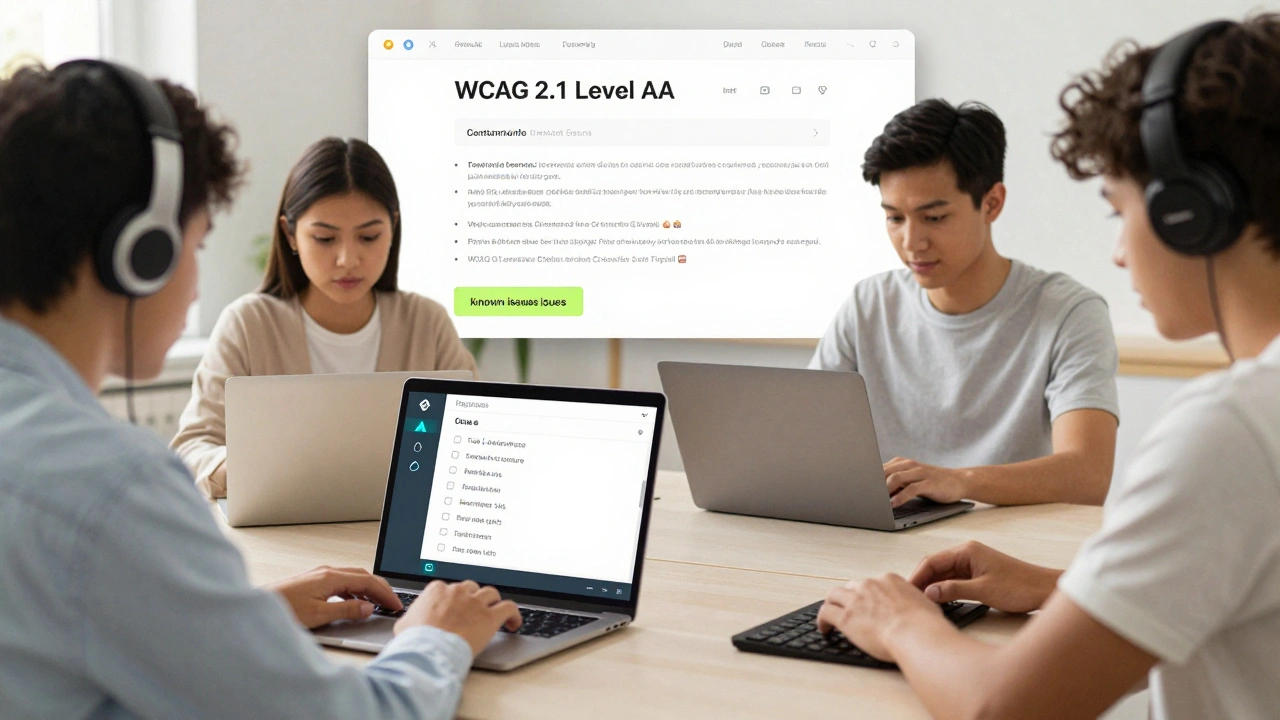
An accessibility statement for courses and LMS platforms isn't optional-it's a legal and ethical requirement. Learn what to include, how to audit your content, and why transparency matters more than perfection.