

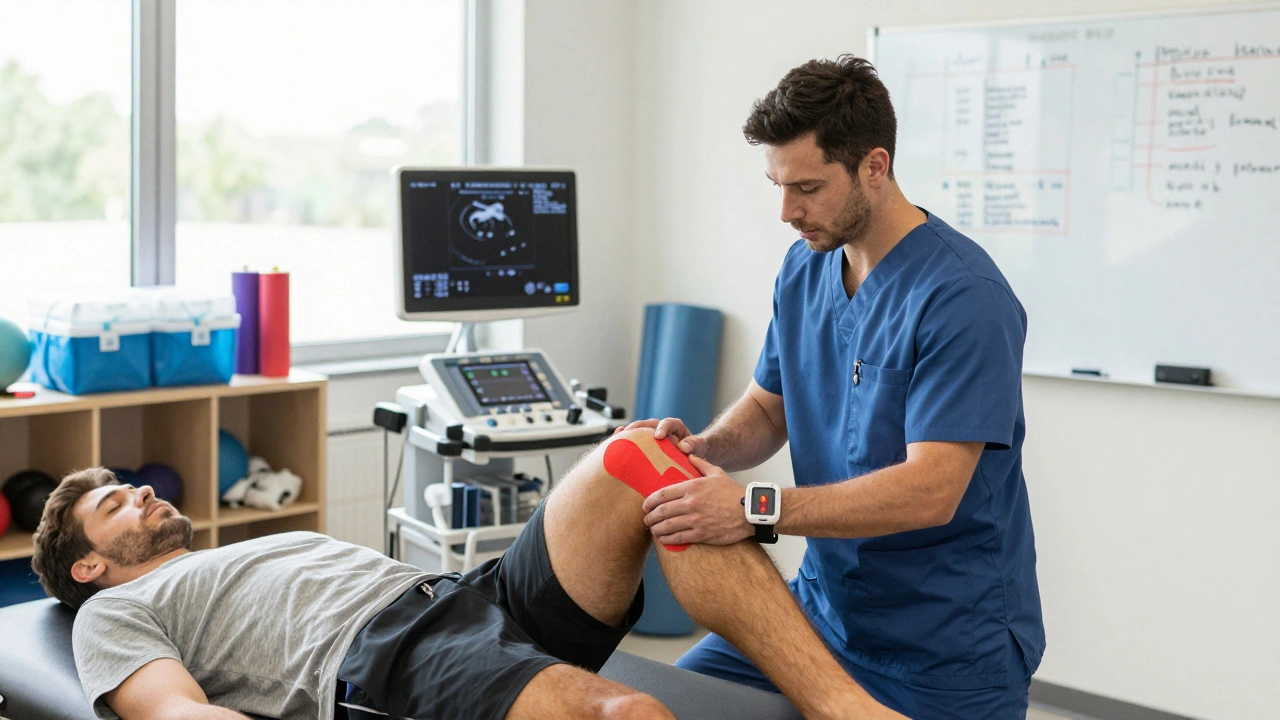
When you think of an athletic training program, a structured system designed to prevent, assess, and rehabilitate sports-related injuries under the supervision of certified professionals. Also known as sports medicine training, it's the behind-the-scenes work that keeps players on the field, not in the clinic. It’s not just taping ankles or handing out ice packs. Real athletic training programs combine science, hands-on care, and smart planning to reduce injuries before they happen—and get athletes back faster when they do.
These programs rely on a few key pillars: injury prevention, proactive strategies like movement screening, strength conditioning, and mobility drills to lower injury risk, sports rehabilitation, evidence-based recovery plans tailored to the sport and the athlete’s body, and sports medicine, the broader field that includes physicians, physical therapists, and athletic trainers working together. You can’t have one without the others. A runner with knee pain? It’s not just a bad shoe—it’s a movement pattern, a muscle imbalance, maybe a training load that’s too high. A good program spots that before it becomes a season-ending tear.
What makes an athletic training program stand out isn’t fancy gear or big logos—it’s consistency. Daily warm-ups that actually prepare the body. Cool-downs that aren’t an afterthought. Communication between coaches, trainers, and athletes. Data-driven decisions, not guesswork. And it works at every level—from high school track teams to pro franchises. The best programs don’t wait for injuries to happen. They build resilience into every practice, every lift, every sprint.
Below, you’ll find real guides on how these programs are built, how they’re tested, and how they actually change outcomes. No theory. No fluff. Just what works in the gym, on the field, and in the clinic.
A detailed look at the curriculum for sports medicine and athletic training programs, covering core subjects, clinical training, certification requirements, and career paths for aspiring professionals.