

When you play a game like blockchain gaming, a type of video game built on blockchain technology that gives players real ownership of in-game assets through tokens and NFTs. Also known as play-to-earn gaming, it turns time spent playing into something you can keep, trade, or sell—unlike traditional games where everything vanishes when you log off. This isn’t just about fancy graphics or flashy marketing. It’s about flipping the script: instead of companies owning your progress, you do.
What makes blockchain gaming different? It uses NFTs in games, unique digital tokens that prove you own a specific item, like a rare weapon, skin, or virtual land to lock ownership to your wallet. That means if you buy a sword in one game, you can potentially use it in another—if the developers allow it. And when the game’s economy runs on decentralized finance, financial systems that operate without banks, using smart contracts to handle payments, loans, and trading, players aren’t just users—they’re participants in a market. You can earn crypto rewards by winning matches, completing quests, or even just leaving your character logged in. Some players in places like the Philippines and Nigeria have turned this into a full-time income, especially when local jobs are scarce.
But it’s not all profit and power-ups. Many blockchain games still struggle with balance—some feel like jobs disguised as games, others crash when too many people try to cash out. The tech is young, and the hype has outpaced real design. Still, the core idea sticks: why should your time, skill, and money only benefit the company? If you’ve ever spent hours grinding for a legendary item, only to lose it when the server shut down, you know this isn’t just theory. It’s personal.
The posts below dive into what’s actually working in this space—not the buzzwords, but the real tools, designs, and player behaviors shaping the future. You’ll find guides on how games are using smart contracts to reward players fairly, how communities are building economies around in-game assets, and why some projects succeed while others vanish overnight. Whether you’re a player wondering if your time is worth it, a designer building the next big game, or just curious how crypto is changing entertainment, these articles cut through the noise.
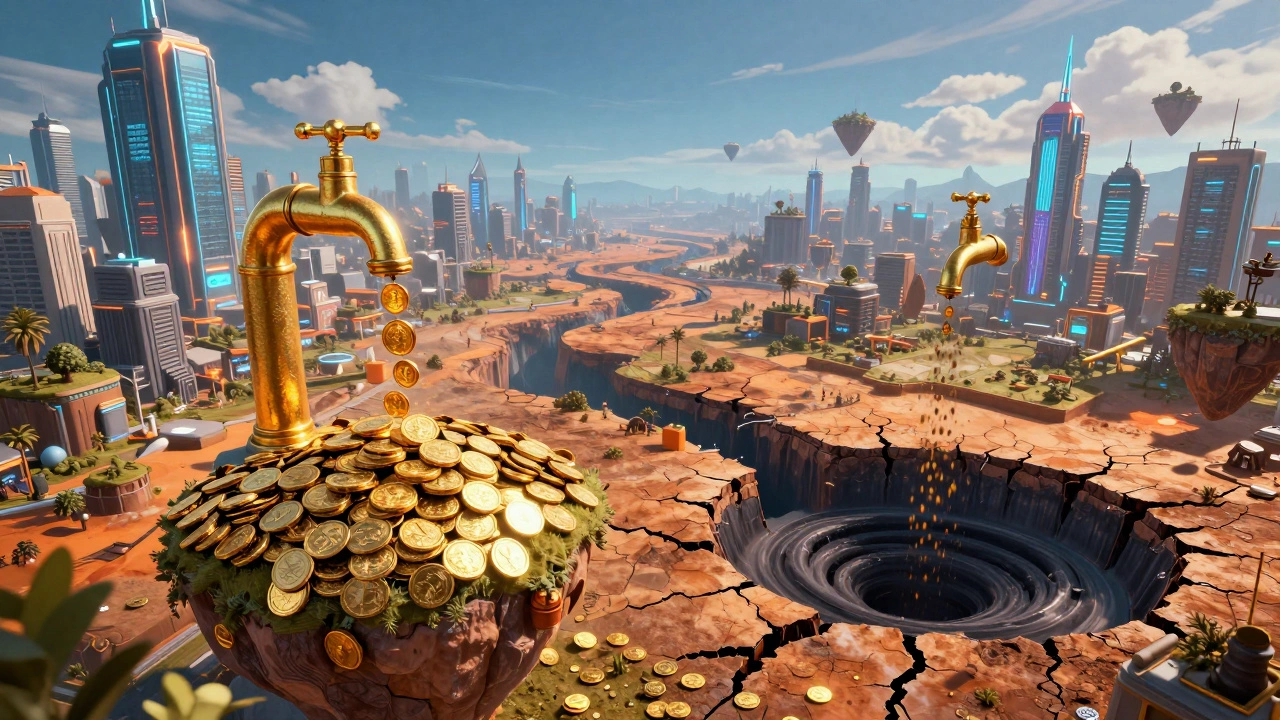
Metaverse economies collapse when inflation isn't controlled. Learn how to design sustainable virtual economies using sinks, dual-token systems, and intrinsic rewards that keep players engaged - not exploited.