

When people talk about economic sinks, systems or investments that consume resources without delivering proportional returns. Also known as financial black holes, they show up everywhere in creative education—especially in MFA programs where the promise of artistic fulfillment often masks the reality of mounting costs. An economic sink isn’t always obvious. It’s not just the $50,000 tuition. It’s the unpaid internships, the out-of-pocket materials, the relocation expenses, the health insurance gaps, the time you can’t spend earning elsewhere—all adding up to a hidden tax on your future.
These sinks don’t just affect students. They shape entire fields. If the only people who can afford to wait five years without income are those with family money or savings, then the arts become less diverse, less innovative, and less representative. That’s why understanding economic sinks matters: they’re not personal failures—they’re structural issues. Look at the posts below. You’ll see how MFA programs, graduate degrees in fine arts that prepare students for professional creative work often fail to address these costs openly. Meanwhile, creative career ROI, the real financial and personal return on investing time and money into an arts education gets buried under idealized stories of bohemian success. And yet, the same collection of articles shows real people building sustainable paths—through remote work, community-based teaching, and hybrid careers that blend art with tech, education, or entrepreneurship.
There’s no magic fix, but awareness is the first step. If you’re considering an MFA, you need to know what you’re signing up for—not just the syllabus, but the financial landscape. The posts here don’t sugarcoat it. They show you how others have managed debt, found funding, built side income, and redefined success outside the traditional gallery or publishing route. You’ll find practical guides on evaluating programs, spotting hidden costs, and designing a career that doesn’t require you to choose between art and survival. This isn’t about giving up on your dreams. It’s about making them possible.
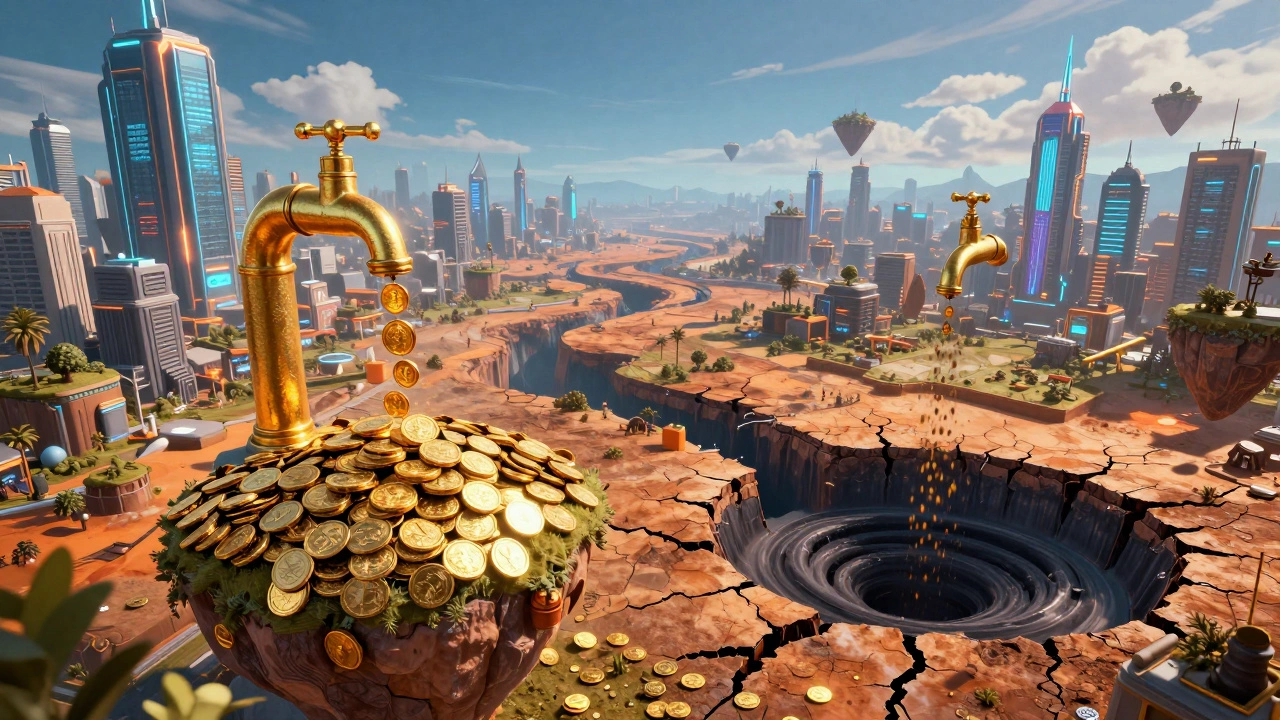
Metaverse economies collapse when inflation isn't controlled. Learn how to design sustainable virtual economies using sinks, dual-token systems, and intrinsic rewards that keep players engaged - not exploited.