

When artists and educators work together across distances, video collaboration, the practice of creating and communicating through live or recorded video to produce shared artistic work. Also known as remote creative teamwork, it’s become the backbone of modern MFA programs, indie film collectives, and digital art studios. It’s not just about Zoom calls—it’s about building trust, sharing drafts in real time, and turning isolation into co-creation.
Video collaboration requires more than a camera. It needs online art education, structured learning environments where students and instructors use video tools to teach, critique, and collaborate remotely. Think of weekly critique sessions where a painter in Chicago shares their canvas with a poet in Brooklyn, and a filmmaker in Lisbon watches live as they both react to the same piece. It’s also tied to creative collaboration, the intentional act of combining different artistic skills—like writing, visual design, and sound—to build something no one could make alone. This isn’t theoretical. Schools using video collaboration report higher student engagement, more diverse feedback, and stronger portfolios because students aren’t just submitting files—they’re having conversations.
Behind every strong video collaboration is a rhythm: scheduled check-ins, shared digital workspaces, and clear roles. A writer might record voice notes over a storyboard; a visual artist might annotate a video frame by frame. These aren’t fancy tricks—they’re habits. And they’re becoming standard in MFA programs that want students to be ready for real-world creative teams, not just isolated studio work. You don’t need a big budget. You need consistency, openness, and the willingness to show up—even when your internet glitches or your cat walks through the shot.
What you’ll find below are real examples of how video collaboration is used in teaching, community building, and artistic production. From feedback loops in online courses to how artists use video to co-create across time zones, these posts show what works—and what doesn’t. No fluff. No theory without practice. Just the tools, patterns, and lessons that are shaping how art gets made today.
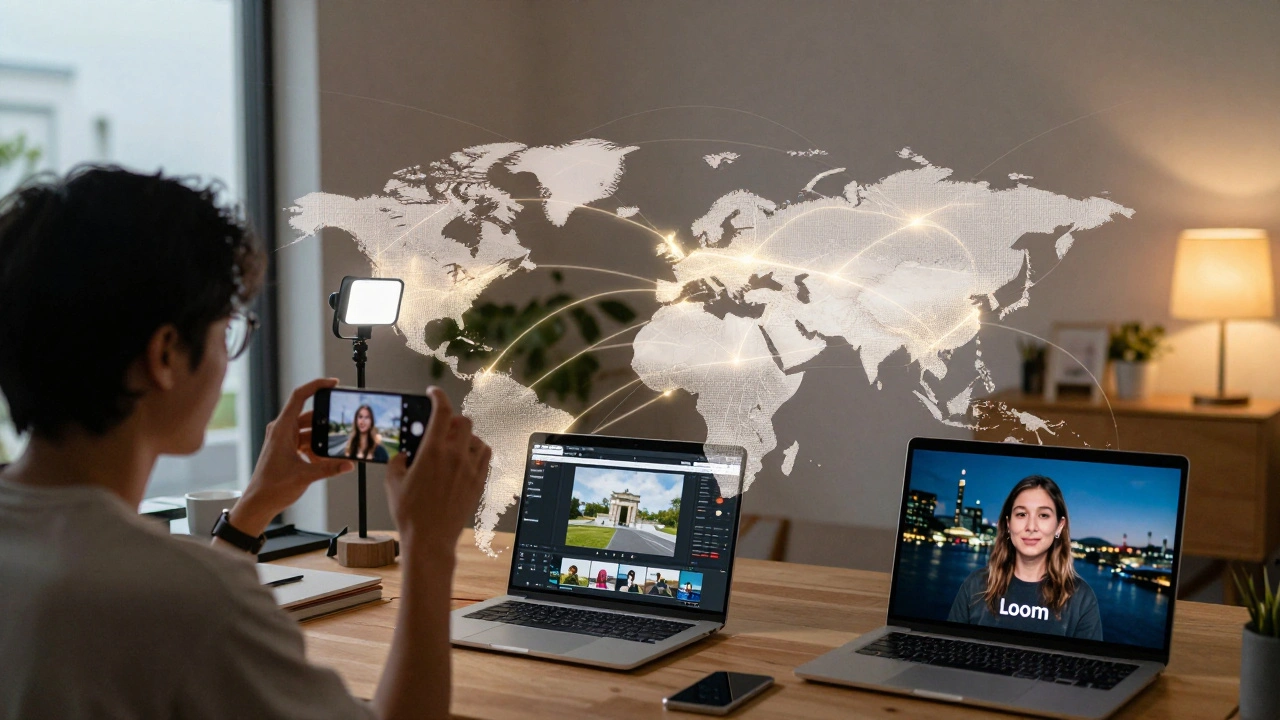
Learn how distributed teams produce professional videos without a studio. Tools, workflows, and real tips for filming, editing, and collaborating remotely across time zones in 2025.